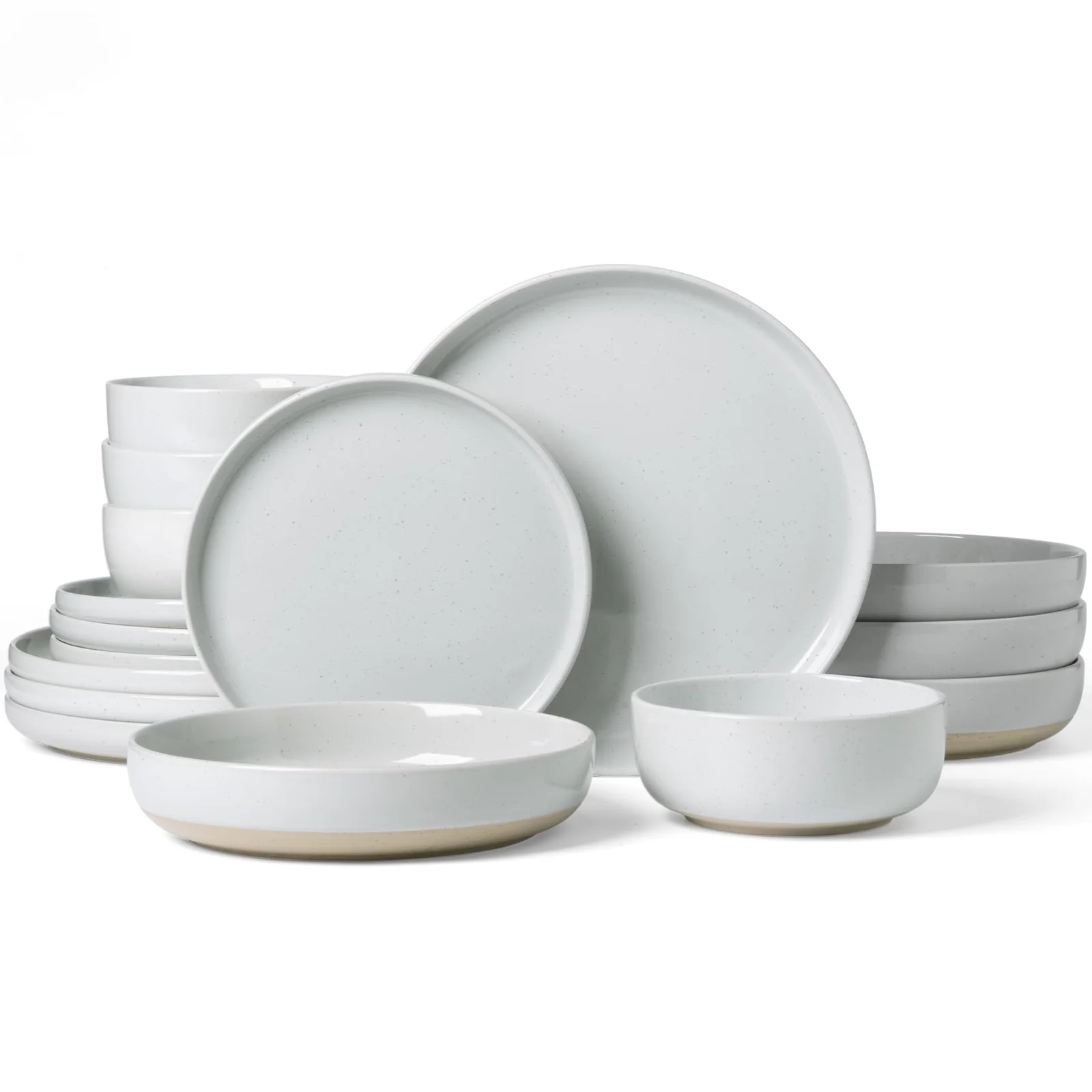
How to size a dinner set to the people who actually sit down
A service for four is exactly four of each piece. What that means on a Sunday, in a dishwasher rack, and on a cupboard shelf that was measured for the last set.
Home › Stories › Stoneware chips. Here is where, why, and what to do about it
The rim goes first, and the chip shows pale clay. Where the damage starts, which habits cause it, and the line between a piece you keep using and one you stop eating off.
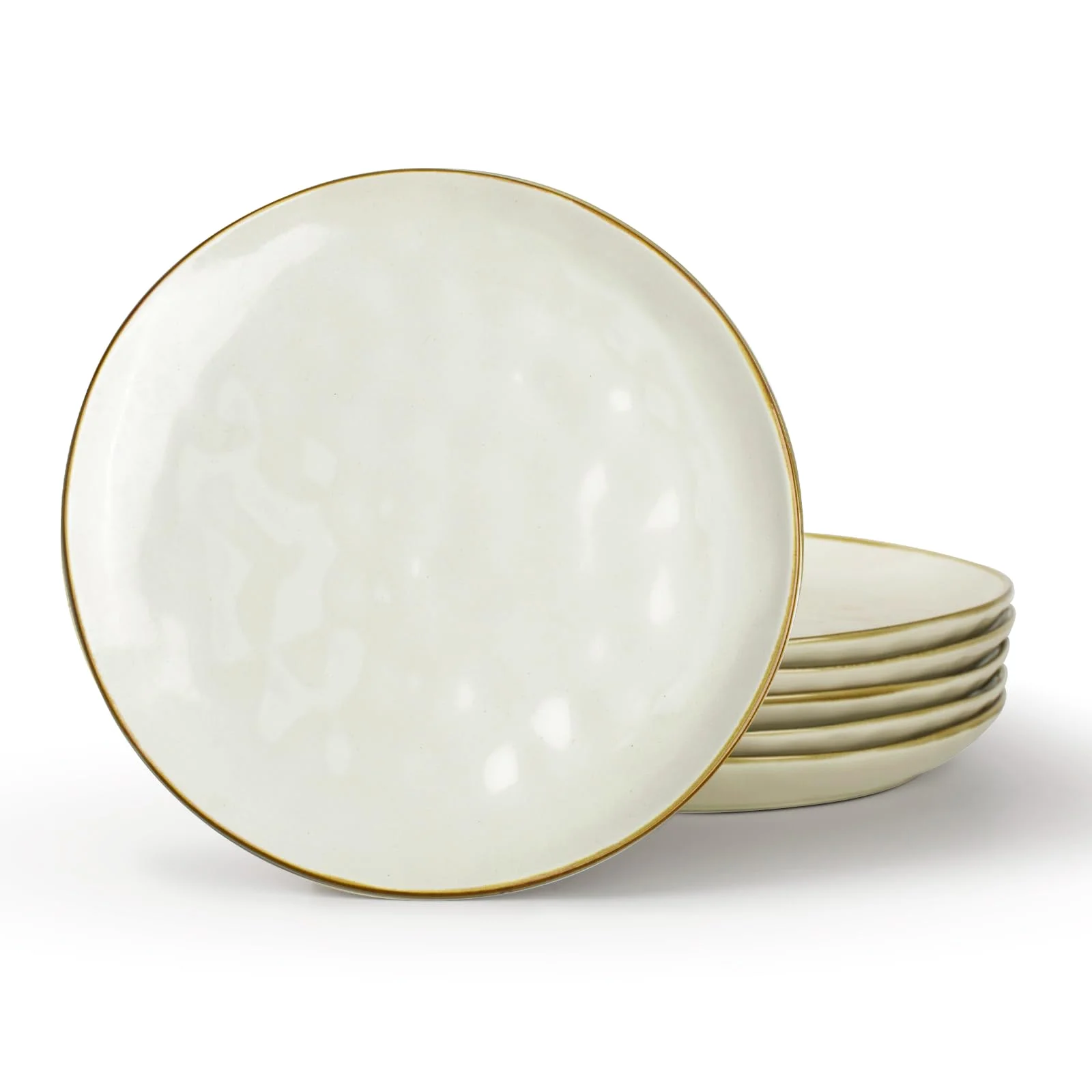
Stoneware is a vitrified body. Dense, non-absorbent, and hard. Hard also means brittle. If something hits a soft metal it will dent. Stoneware does not. It chips. That is the material talking.
A chip is an honest break. The fresh break shows pale clay beneath the glaze. That is why a nick in stoneware reads differently from a nick in white porcelain; the exposed clay is visible against the reactive glaze. Visibility is not a sign of poor craft. It is a property of the body and the way glaze rests on it.
We do not pretend stoneware is indestructible. Accidents happen: a plate meets a tap, a plate meets another plate, a plate meets a wire. The rim is the most vulnerable place for a simple reason: it is thin. Thin edges take the knock. They also show a chip faster than a flat surface does.
If you are handling a newly chipped piece, consider how it broke before deciding what to do next. A tiny flake from the outside rim is different in consequence from a hairline crack that runs through the body. The former can often be smoothed and kept in service. The latter is where a piece stops belonging on a table.
The rim takes more work than any other part of a plate. It is thin by design. That thinness is what makes the plate sit right in the hand and sit neatly in a place setting, but it also makes the rim the first point of failure. It meets faucets, sink edges and neighboring plates. When something presses or drags across that thin band the ceramic gives by chipping, not by bending.
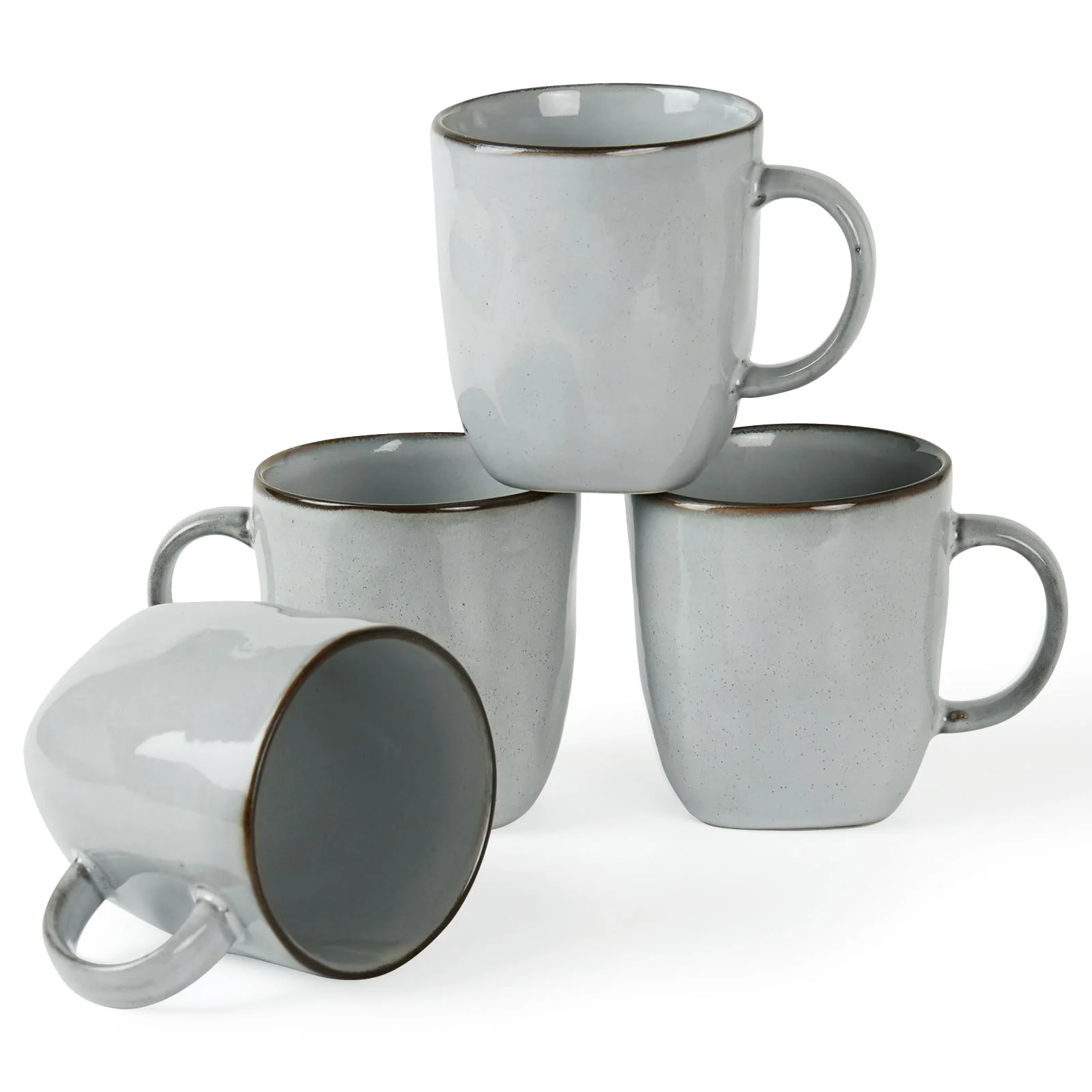
Dinner plates run 10 to 10.5 inches. A 10.5-inch plate does not always drop into a rack slot cut for a 10-inch plate. Forcing it is how a rim meets a wire and how a chip begins. Do not force a plate into a slot that feels tight. Check fit before you load. Simple patience reduces the rim-to-wire collisions that start most edge chips.
Stacking is part of the rim story too. When bare clay from a foot ring rubs against a glazed surface it acts like a fine abrasive. Over time that abrasion leaves the grey ring you see on the bottom plate in a tall stack. Two high is the honest advice for stacking without extra protection. And if you have noticed a chip already, treat the rim with a little more care. One buyer put it plainly: "You do have to be careful as with most stoneware — one has already chipped on the edge."
Thermal shock is a sudden change in temperature that stresses the body unevenly. If a piece moves from cold to very hot in an instant, the different parts expand at different rates and a crack can run through the body. That is a different failure mode from an edge chip. A chip is a surface loss. Thermal shock produces a break that goes inward.
Common moves cause thermal shock. Fridge to hot oven is the classic. Pouring cold water into a hot bowl is the other familiar one. The practical point is simple: temperature needs to change gradually when stoneware is involved.
| The move | What it does | What to do instead |
|---|---|---|
| Fridge to hot oven | Causes thermal shock, leading to a crack through the body | Allow the piece to warm toward room temperature before using in a hot oven |
| Cold water into a hot bowl | Triggers thermal shock and a through-body crack | Avoid pouring cold liquids into recently heated stoneware |
| Pouring cold contents into a hot bowl | Produces the same rapid stress as above | Let hot items cool or warm the bowl first |
| Assuming oven-safe from one item across a line | Leads to misuse because oven and freezer ratings are stated per line | Read care claims line by line for each product |
| Forcing a 10.5-inch plate into a 10-inch rack slot | Causes the rim to meet a wire and chip | Do not force plates into tight slots; check fit before loading |
We list those moves because they explain the difference between a chip and a crack through the body. The latter is usually caused by temperature shock rather than an impact at the rim.
Care claims are stated line by line on the pack. Nearly every line is dishwasher safe and microwave safe. Oven and freezer ratings are not general across a collection. A mug rated for the oven does not make the platter beside it oven-safe. Read the label for each item.
In a dishwasher the unglazed foot holds water the longest. That is why a plate can come out dry on top and damp underneath. Glaze stops short of the base, and that bare ring is what lets a piece part from the kiln shelf. Bare clay against glaze acts like a fine abrasive when stacked. A stack of six leaves a grey ring on the plate at the bottom. It will wash off at first and eventually it will not.
Racks matter. A plate larger than the slot will scrunch against a wire if you push it in. That scrunch is how rims meet wires and how many chips begin. Set plates where they sit naturally, not where they have to be forced. If a piece is hard to lift in or out, do not muscle it. Treat the rack as an environment that should accommodate the shapes, not the other way around.
You will find practical annoyances. One buyer observed: "They are a little tricky to get out of the microwave as they have a flat bottom, so there's no raised lip to get your fingers under." That is a real handling note to keep in mind when you load and unload.
The foot ring is a necessary feature. It is left unglazed so the piece releases cleanly from the kiln shelf. That same unglazed area will abrade when it rubs against glazed surfaces. Bare clay is a fine abrasive; the contact marks darken into the familiar grey ring on a plate at the bottom of a tall stack.
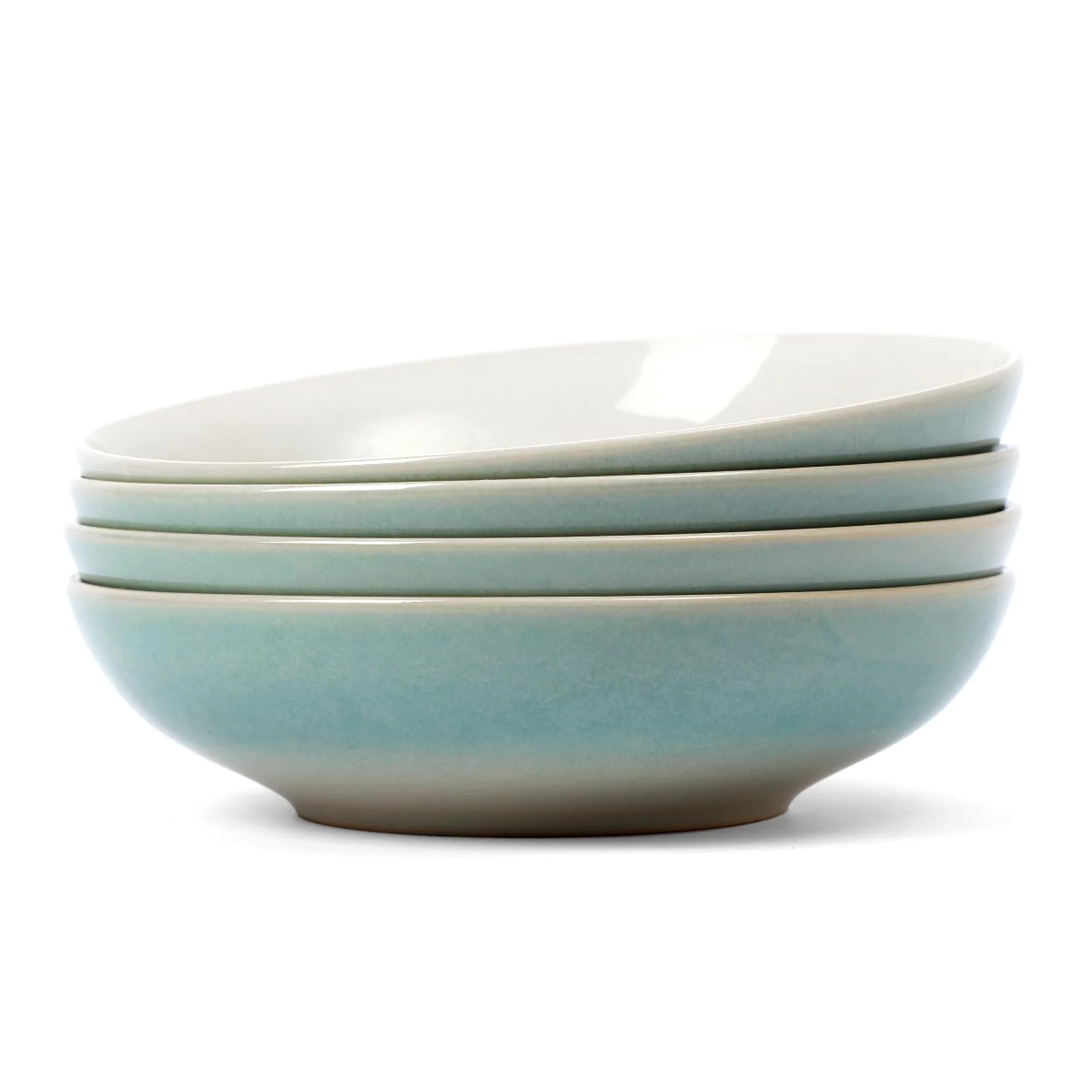
The honest stacking rule is short. Two high is the safe limit without added protection. Stack higher, and the abrasion multiplies. Those first light grey marks will wash away for a while. After many cycles they will become permanent scuffs. Felt rounds between pieces solve the problem. They break the clay-to-glaze contact and protect rims from repeated micro-abrasion.
If you like to store plates flat in a pantry, use thin separators. If your kitchen space forces you to stack taller, consider a storage aid such as a divider or a foam pad. That is not a statement about style. It is a mechanical solution to a mechanical interaction between bare clay and glaze.
One buyer summed the trade-off: "Someone else was disappointed that you can only safely stack 2 high, and no, you shouldn't stack higher than 2, but that doesn't matter for me." The preference is yours. The material has its limits.
Microwaves heat contents and the ceramic along with them. Because reactive-glaze stoneware often has a flat bottom, a mug or bowl can lack a lip to grip. That makes moving a hot piece out of the appliance awkward. It also increases the chance that a hand will slip and the rim will meet a hard edge.
Handle hot stoneware as you would any hot cookware. Use oven mitts or tongs rated for the job, and allow a moment for the piece to settle if it has been heating with dense contents. If the item is heavy and you cannot get a secure hold, let it cool slightly before fishing it out. The risk here is not a mysterious defect but the same predictable fact every time: hard materials do not bend, they break.
If a mug or bowl gives you a handling concern, adapt the routine. Small silicone pads, a folded towel, or a microwave-safe trivet can make removal safer and reduce slips that lead to chips. These are practical mitigations. They do not change the material. They change how you interact with it.
one buyer
"They are a little tricky to get out of the microwave as they have a flat bottom, so there's no raised lip to get your fingers under."
A chip that removes a sliver from the outside of a rim is often repairable by smoothing. Sanding with a fine abrasive can round the sharp edge so it is safe to handle and does not catch on other dishes. That makes the piece usable again for everyday service.
Take care with the finish. Sand only the exposed clay and avoid abrading remaining glaze more than necessary. If you are uncomfortable performing the work yourself, a local ceramic repair service can advise. The goal in sanding is practical: remove the sharpness and stop the chip from growing when they meet other surfaces.
Do not sand when the damage is a crack through the body. A through-body crack is a structural failure. It will not be fixed by a cosmetic sanding. In that case the piece has changed category. A crack that runs from rim into the body is no longer safe as tableware. That is where a piece stops belonging on a table and becomes a plant saucer.
If you have questions about a crazed or altered glaze layer, consult guidance from a public health authority. We cannot give medical or safety guarantees about damaged glaze. When the glaze itself appears compromised, check the public guidance available in your area.
Some breaks are categorical, and a replacement from the same collection will read as a family rather than a match. A crack through the body is one. Thermal shock is the usual cause for that failure mode, and a crack that runs internally means the plate cannot perform as tableware. It will take more stress and it will fail in unpredictable ways. Once a break reaches that point the practical decision is to retire the piece from food service.
Retirement does not mean waste. A cracked plate makes a useful plant saucer, a tray for keys, or a base for craft projects. These are ways to keep the object in use without exposing food to a compromised body. Repurposing is a straightforward, honest option.
If you are unsure whether a flaw is a chip or a through crack, look at the break closely. A chip shows exposed pale clay at the edge. A through crack will continue inward and will often show in handling as a loss of integrity. When in doubt, choose safety for food use. A piece intended for oven or freezer work needs its own line rating; do not assume one product's oven rating covers another. If you need further help deciding, contact a local ceramics professional who can assess the damage without offering guarantees.
01Next
Same subject from a different side.
A service for four is exactly four of each piece. What that means on a Sunday, in a dishwasher rack, and on a cupboard shelf that was measured for the last set.
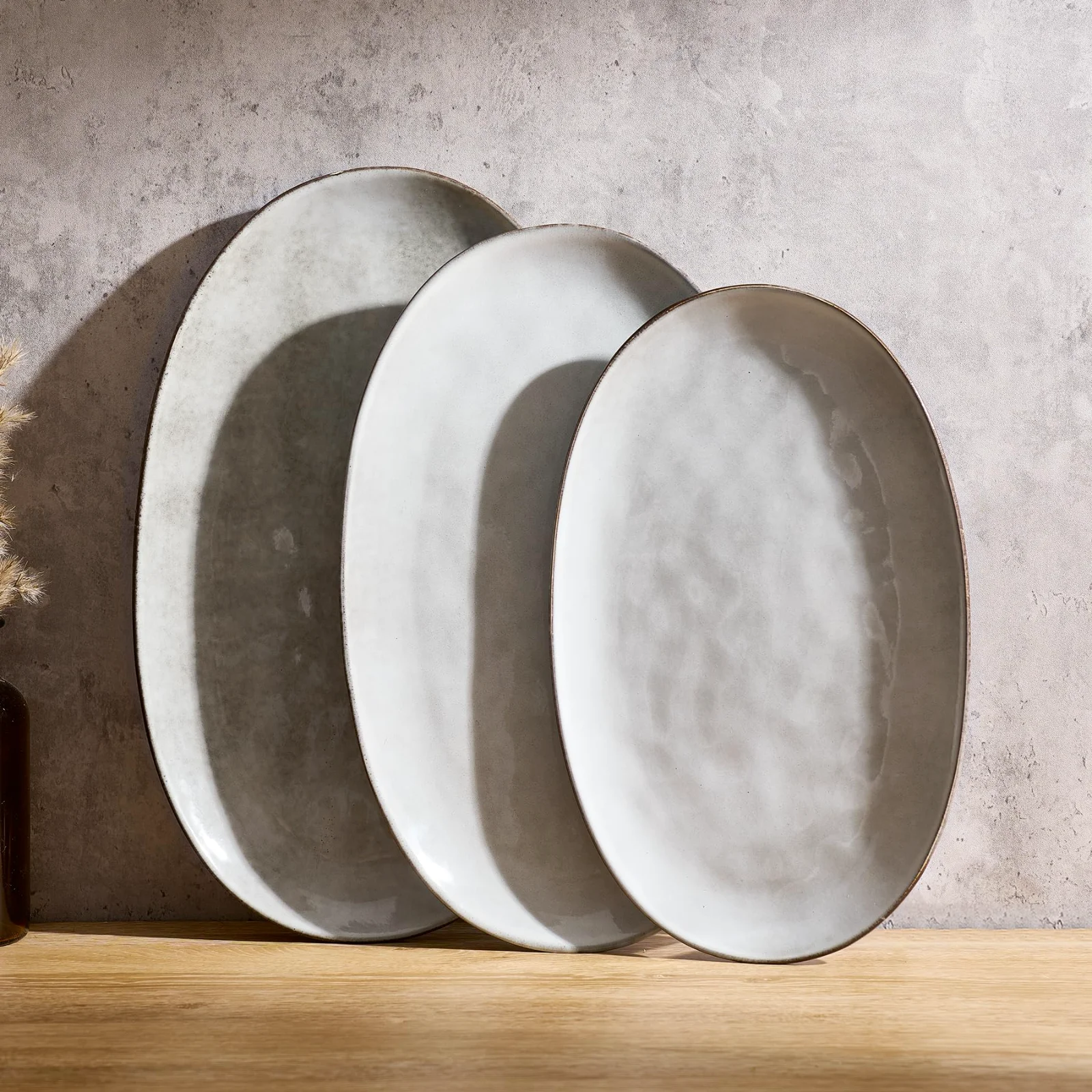
Colour that pools at a rim, speckle that comes up through the body, and a foot ring left bare on purpose. The mechanism behind the surface, and what it costs you.
Every Famiware size, every glaze
Every diameter, capacity and glaze in the Famiware lineup sits behind this button, with the price we last read against each one.