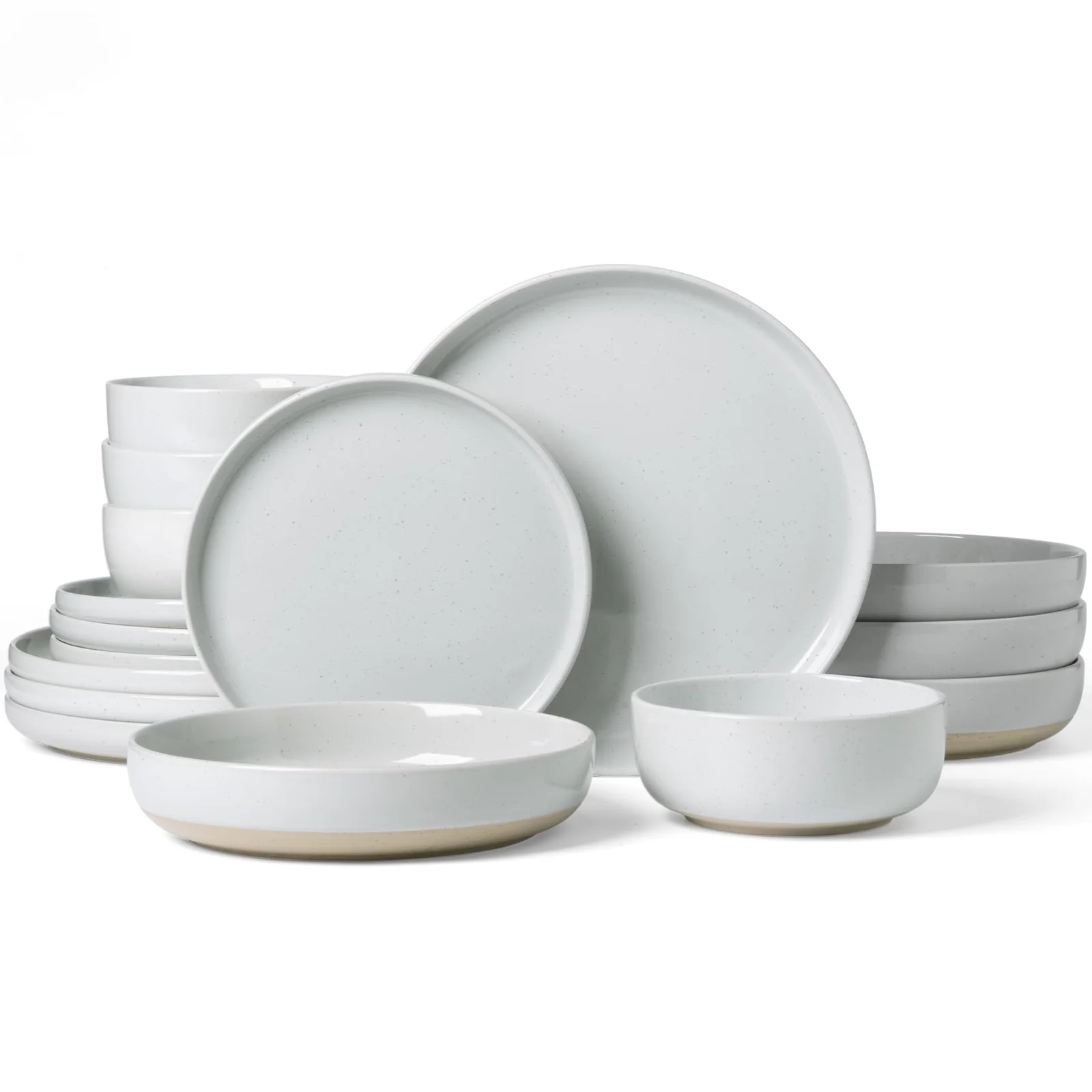
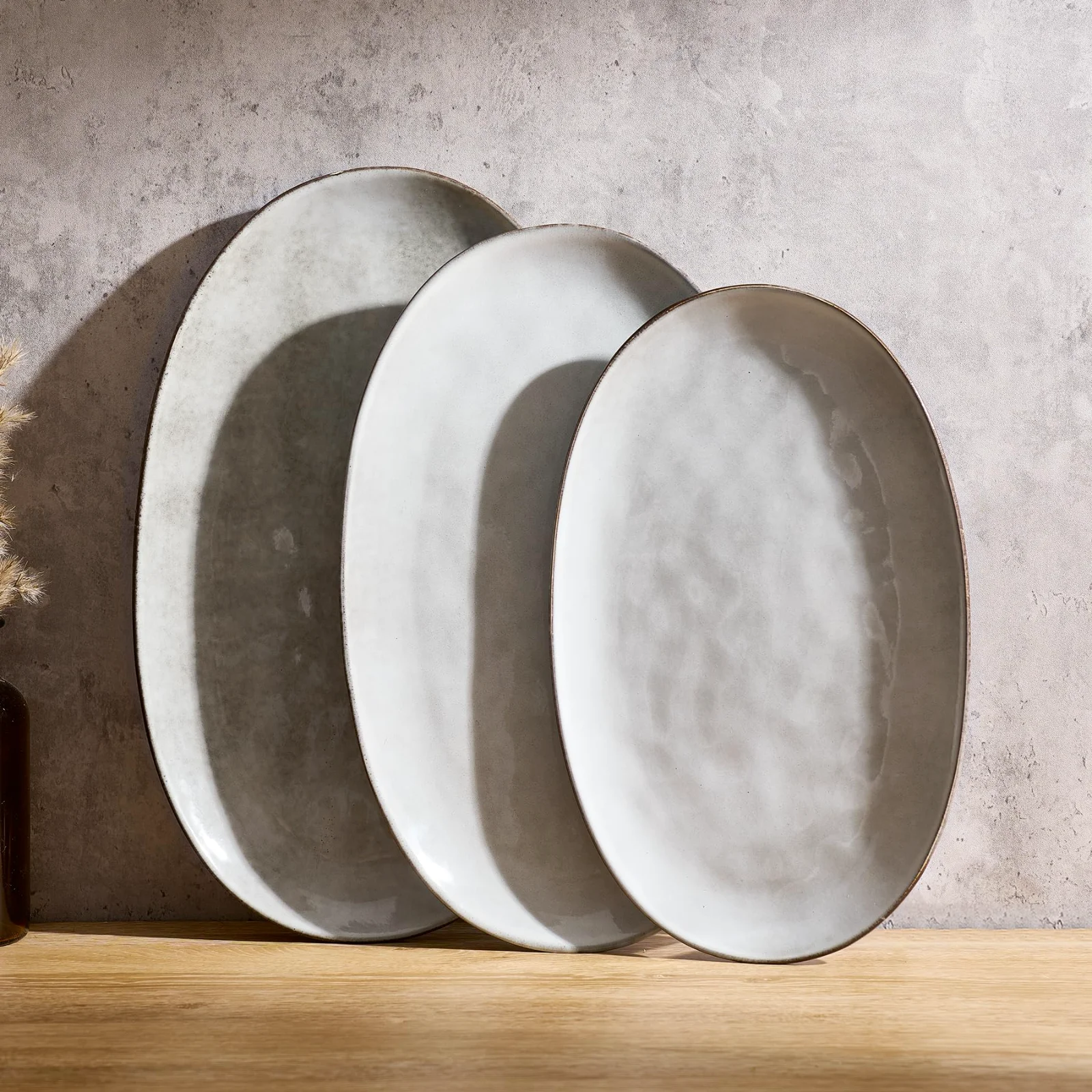
What a reactive glaze does in the kiln, and why your plates will not match
Colour that pools at a rim, speckle that comes up through the body, and a foot ring left bare on purpose. The mechanism behind the surface, and what it costs you.
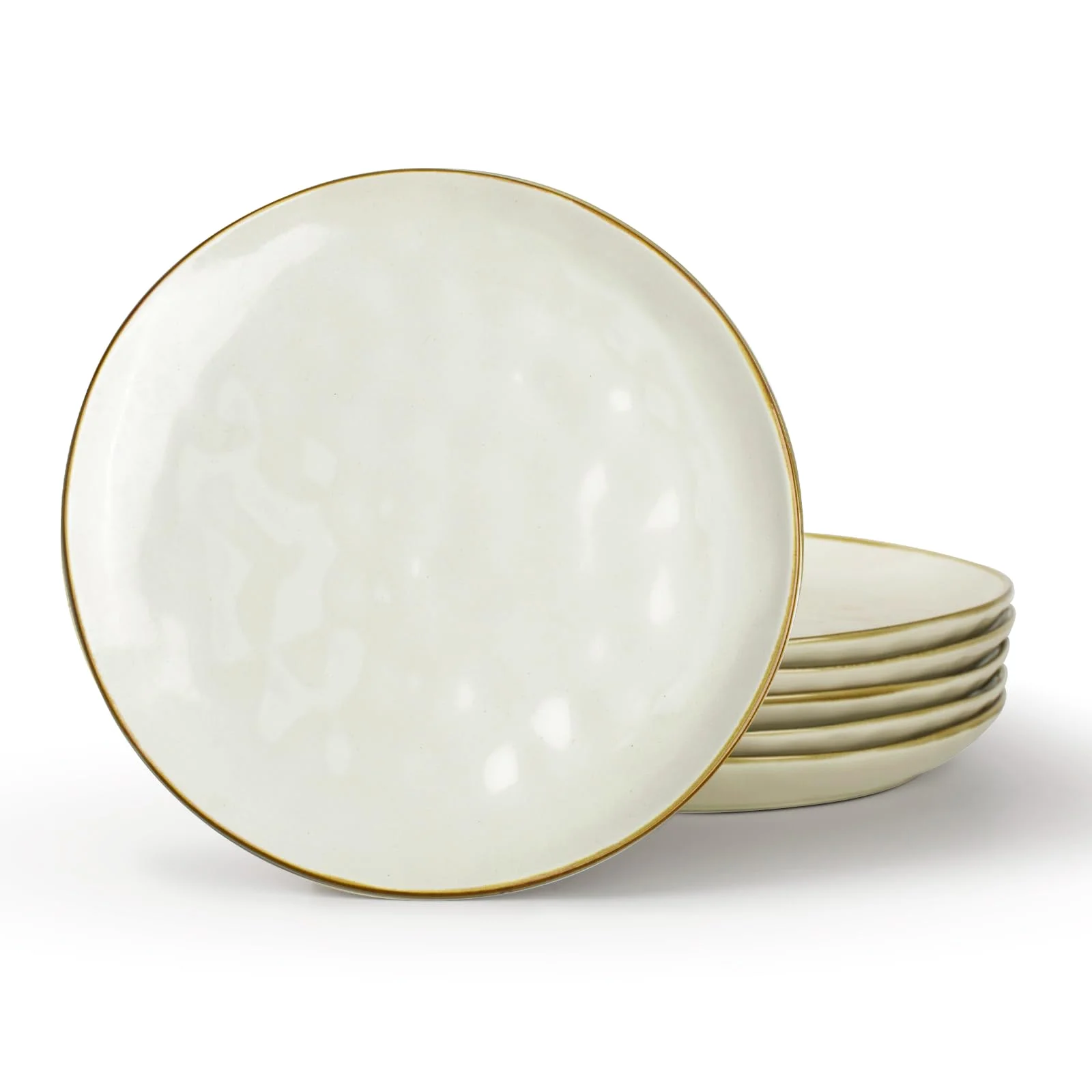
Start where the forks are. Count the chairs at your everyday table, the ones you actually pull up every evening. A "service for four" means exactly four of each piece in the box. There is no spare. For Famiware reactive-glaze stoneware that matters in a practical way: the glaze finish gives each plate a small, visible personality so replacements bought later rarely match perfectly. That makes getting the count right the first time more important than chasing a shade you might find later.
If you host occasionally, plan for the usual seat count plus an occasional extra. A single extra guest once a month does not need a full extra set. If your table regularly seats six, choose a service for six. For people who prefer flexibility, two matching fours can be easier to hand around, and they fit into our range of stacked storage differently because of the unglazed foot ring on every piece. The foot ring grips the table and marks a glazed plate stacked underneath. Two high is the honest stacking advice when you are living with the weight and finish of reactive-glaze stoneware. We say it because our glaze pools and variations sit close to the foot ring, making every stack a small study in lived-in surface and contact points.
We list contents plainly, and the dinner sets shelf prints the piece count on every card. A 12-piece service for four is four dinner plates, four salad plates, four bowls. Mugs are not included unless the name says so. A 16-piece set adds four mugs or four pasta bowls. For all of our boxes the count is exact. The reactive-glaze finish on pieces in the box will show subtle differences from run to run. That is part of the line. It explains why the count is the most common regret and why specifications matter.
| Set size | Serves | What is in it | Price span |
|---|---|---|---|
| 12 pieces | 4 | Four dinner plates, four salad plates, four bowls | $49.99 to $137.92 |
| 16 pieces | 4 | Adds four mugs or four pasta bowls to the 12-piece composition | $77.20 to $129.99 |
| 18 pieces | 6 | Six dinner plates, six salad plates, six bowls | $79.99 to $129.99 |
| 24 pieces | 8 | Eight dinner plates, eight salad plates, eight bowls | $46.99 to $179.99 |
| 24 pieces | 6 | Six of each piece in the box; composition varies by model | $129.70 to $170.99 |
We include the exact model counts and price spans across the range so you can compare choices. Our reactive glazes collect differently in bowls and on rims, so the set that arrives will feel like a small family of pieces rather than identical copies. That affects how you mix them into existing dinnerware and how many of each you want.
Open the cupboard and take a ruler. Measure the shelf clearance and the depth. Dinner plates in our range run 10 to 10.5 inches across. Salad and dessert plates are 8 to 8.5 inches. Those half inches matter when you are sliding plates upright on a shelf or setting a stack into a cabinet groove. A 10.5-inch plate does not always drop into a dishwasher slot cut for a 10-inch one. Our pieces are made from stoneware that is heavier than what most people are replacing. That means a cupboard shelf that felt roomy with light porcelain can suddenly feel crowded with stacked, reactive-glaze plates.
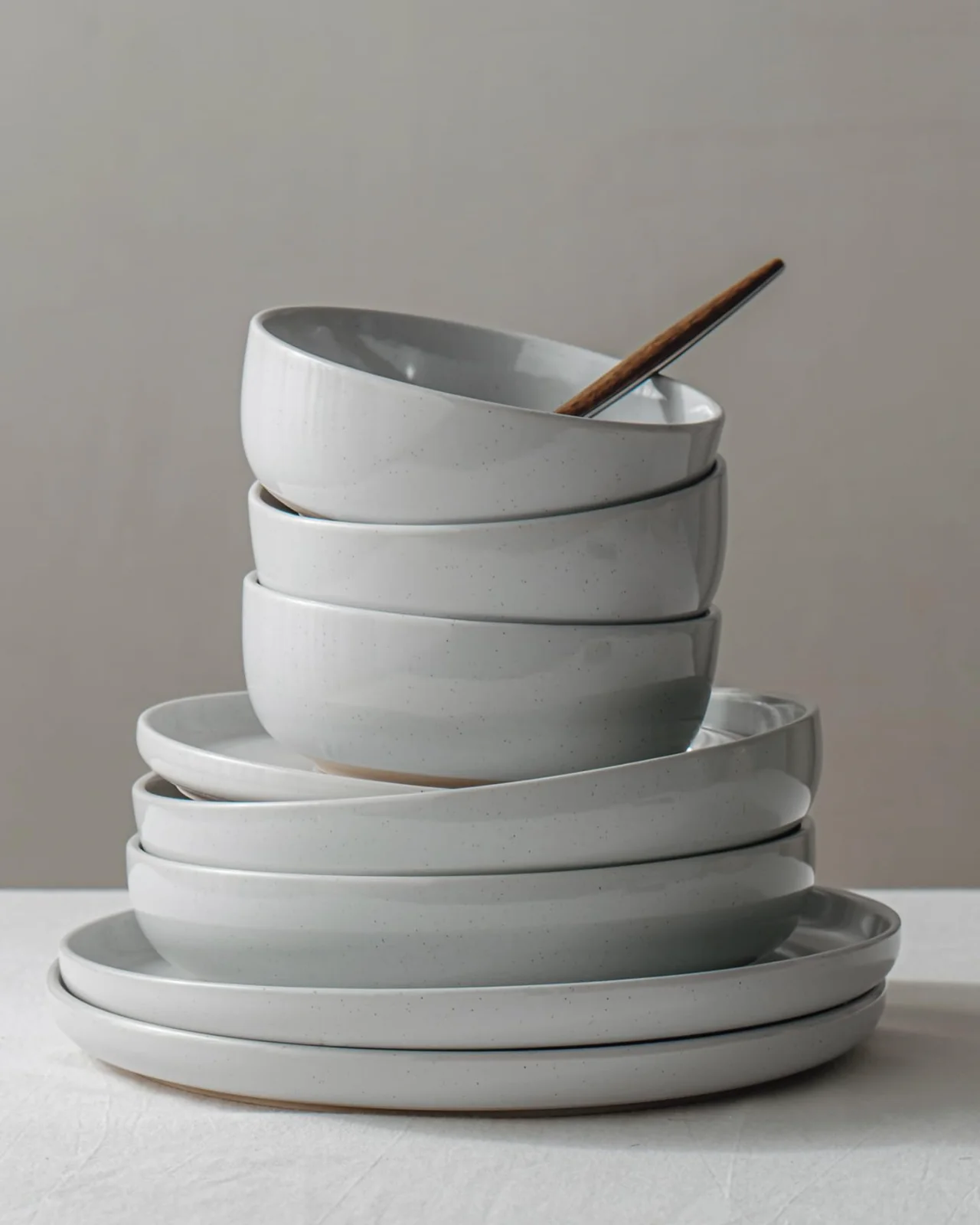
Also measure the usable height between shelves. The foot ring on every piece is left unglazed so it releases from the kiln shelf. That raw ring grips the table and takes up a bit of vertical space. Two high is the honest stacking advice. If you plan to store six dinner plates high, reconsider the shelf or buy fewer at once. The way reactive glaze pools near the rim and the foot shows on the underside can vary from batch to batch. Those are the kinds of small, visible differences that make a measured cupboard important when choosing how many pieces to buy.
You will wash these plates. How you load the dishwasher matters because our dinner plates and salad plates sit differently than thin china. The rim on our plates is designed to be high enough to keep gravy and dressings on the plate, but low enough not to interfere with placement in the rack. That rim is a functional choice in this range. — one buyer
The rim on the plates is an excellent design feature. Just high enough to keep the gravy in the plate, or the salad on the dish; it does not interfere at all when placing plates in the dishwasher. — one buyer
Take that buyer at face value and measure your top rack. Bowl orientation also changes how your mugs will sit next to plates. The foot ring that releases from our kiln shelf will mark a glazed plate stacked underneath, so avoid stacking a wet plate on a dry one in the dishwasher if you want to preserve the surface. Two high is the honest stacking advice at the table. In the machine, place pieces where they sit flat and stable. The added weight of stoneware shifts the dishwasher dynamics. An 11-inch diagonal slot might hold a 10-inch plate fine but reject a 10.5-inch plate. Measure, then load a dry run.
Bowls are where expectations diverge. A 12-piece service for four includes four bowls. What those bowls are is the key question. Cereal and soup bowls in our range are about 5.5 inches across, 23 to 25 ounces, with steep sides. They keep spoons upright and prevent utensils from falling through the center. One buyer put it simply. "They're the perfect size for cereal, your utensil won't fall into the bowl — which is the problem I was having with the much wider bowls that came with my dinnerware set." — one buyer
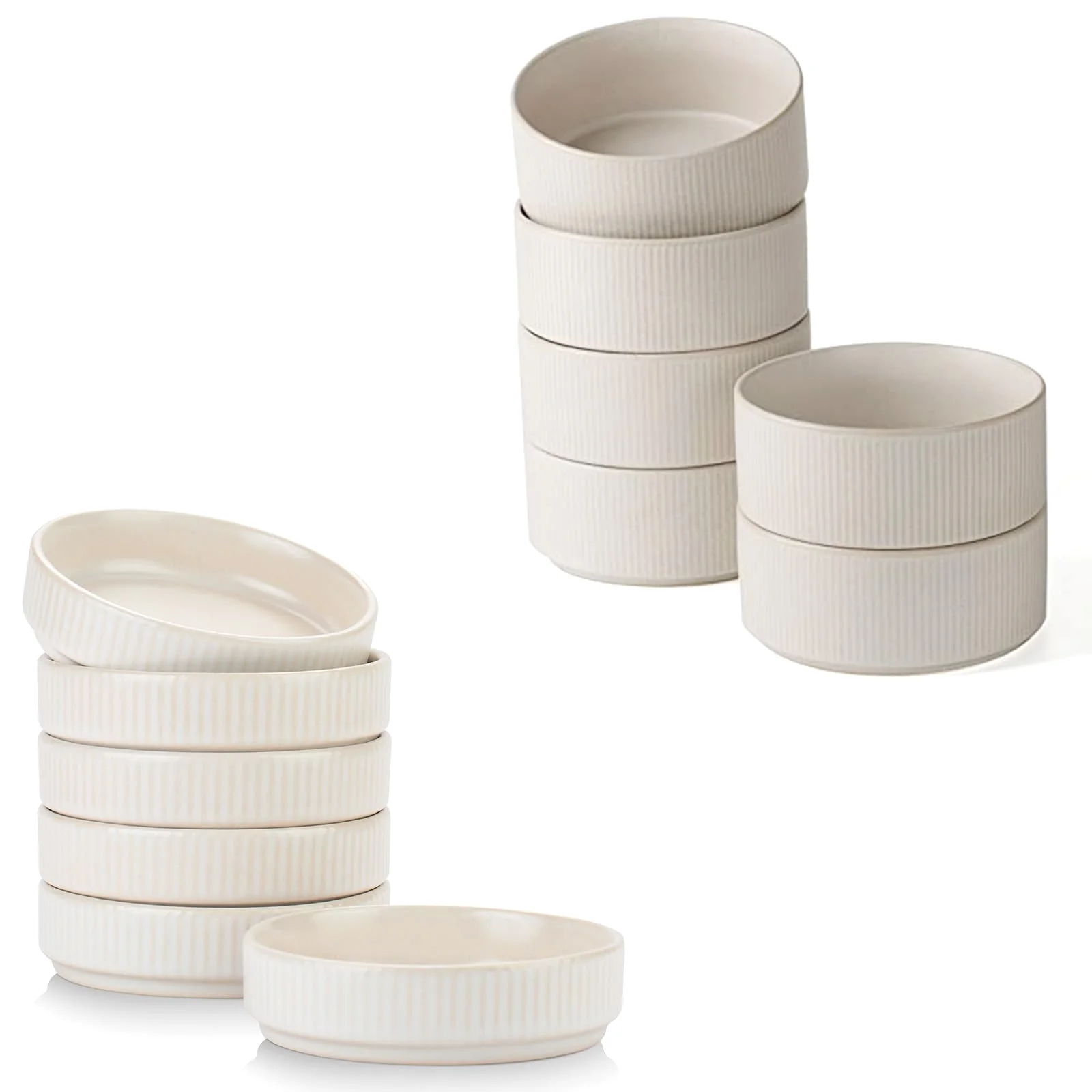
Pasta and salad bowls are a different shape and size in our line. They run 7.5 to 8.75 inches and hold 30 to 33 ounces. They are low and wide, which changes how they sit in stacks and in the dishwasher. A 16-piece set will add either four mugs or four pasta bowls to the basic 12-piece format. If a recipe night or a salad habit matters to you, check the model name for pasta bowl inclusion. Our reactive glaze behaves differently in deep versus shallow forms. You will see more pooling and linear variation in a deep soup bowl than on a wide pasta bowl. That is a character you should plan around when choosing the count.
Mugs in our range run 11 to 14 ounces. That two-ounce difference is the one buyers talk about. It changes whether you can add cream to coffee without spilling and whether the mug feels balanced when carried with a saucer or plate. The precise volume and internal glazing pattern are part of our reactive-glaze approach, which means an 11-ounce mug from one run can look slightly different inside to an otherwise identical 13-ounce mug. "I like that they're 13 ounces instead of 12 so that you can add cream to the coffee without the mug being too full, easy to carry without spilling." — one buyer
Espresso cups are 3 to 3.34 ounces with saucers in models that include them. Mugs are not automatic. If the model name does not say mugs, the box will not contain them. That matters because mug handles, internal glaze pooling, and weight distribution are specific to this range. The handle and wall thickness add heft. Stoneware mugs feel substantial in the hand and that changes how many you want in a set. Balance the desire for a larger sipping volume against the heavier feel when you carry a full stack of plates and cups from sink to table.
Choosing a six-person set or two four-person sets comes down to flexibility and the visual effect of reactive glaze. There are 31 models in the 18-piece serving six range and 75 models at the 12-piece serving four size, with price ranges that reflect design and glaze technique. A single 18-piece box gives you six of each piece. Two 12-piece boxes give you the same total counts but allow mixing glazes or staggered replacement. Because our reactive-glaze pieces vary from batch to batch, two matching 12-piece boxes bought at different times may not be identical. That is the practical trade-off.
Look at how you use plates daily. If you often set the table for six from habit, an 18-piece service for six saves time and gives every place the same rim and the same foot ring. If you host in pairs or four-person households and sometimes add two guests, two 12-piece sets let you rotate looks. The foot ring on each piece will leave a mark if stacked directly on a glazed surface, so how you stack across different glazes will affect wear patterns. The choice is practical and aesthetic in one.
People do not often buy a whole new service as a second purchase. They buy a single piece they need, which is why the plates shelf sells dinner plates in sixes on their own. Extra dinner plates rank high. So do extra bowls when the family grows or breakfasts get serious. Serving pieces and mugs come next. Our reactive-glaze finishes mean a late purchase may not match exactly, which is why many customers buy a second set in the same run if they expect to expand later.
Practical additions are guided by the composition of the original box. A 12-piece set can be complemented with a four-piece mug pack or a set of pasta bowls. A 24-piece serving eight set removes that question by supplying eight of each piece, but remember the price spans in the range and pick a model whose glaze you want to live with. The unglazed foot ring is always visible on the underside and it will grip surfaces differently depending on table finish. That small, honest fact from our range informs the second buy more than style trends.
01Next
Same subject from a different side.
Colour that pools at a rim, speckle that comes up through the body, and a foot ring left bare on purpose. The mechanism behind the surface, and what it costs you.
The rim goes first, and the chip shows pale clay. Where the damage starts, which habits cause it, and the line between a piece you keep using and one you stop eating off.
Every Famiware size, every glaze
Every diameter, capacity and glaze in the Famiware selection sits behind this button, with the price we last read against each one.