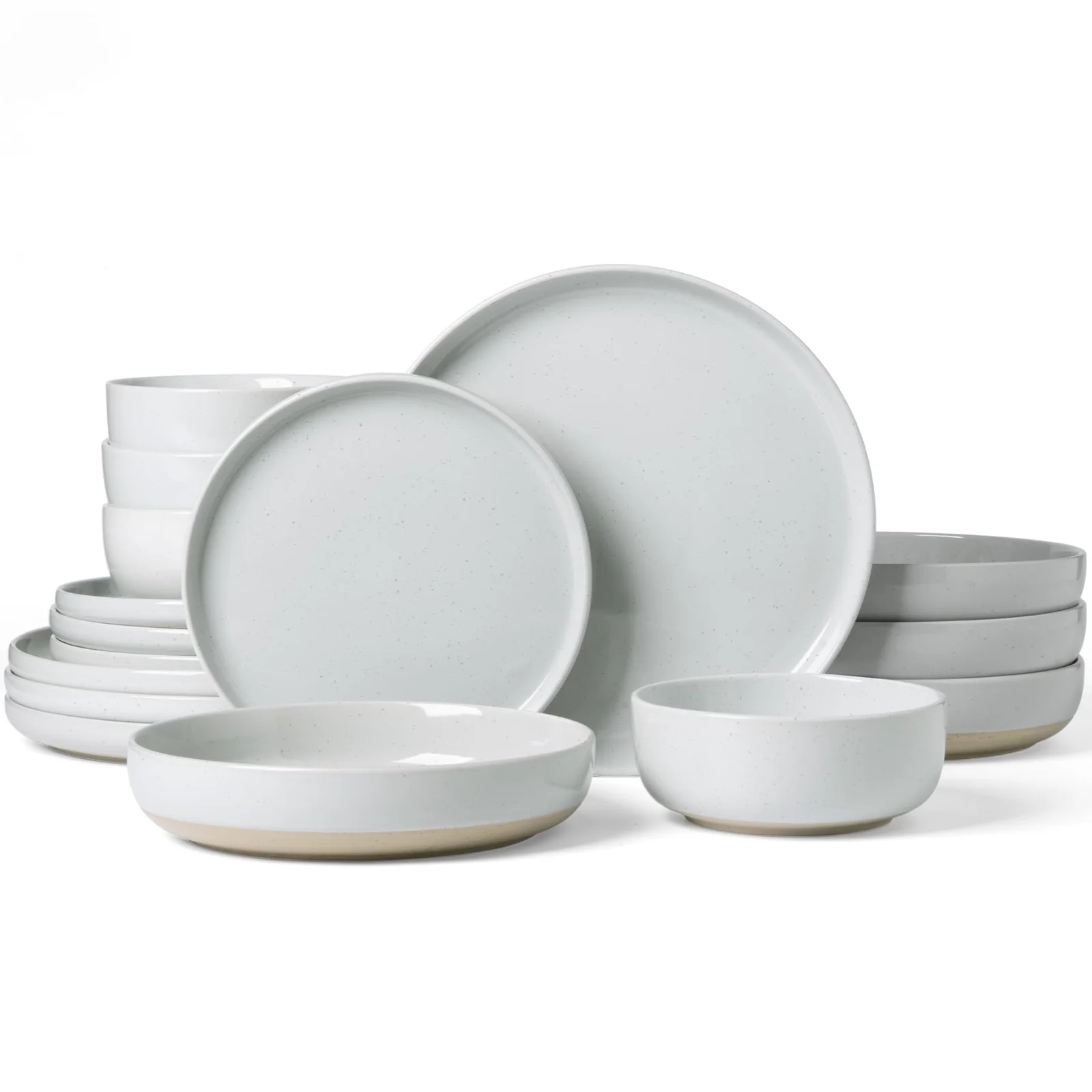
How to size a dinner set to the people who actually sit down
A service for four is exactly four of each piece. What that means on a Sunday, in a dishwasher rack, and on a cupboard shelf that was measured for the last set.
Home › Stories › What a reactive glaze does in the kiln, and why your plates will not match
Colour that pools at a rim, speckle that comes up through the body, and a foot ring left bare on purpose. The mechanism behind the surface, and what it costs you.
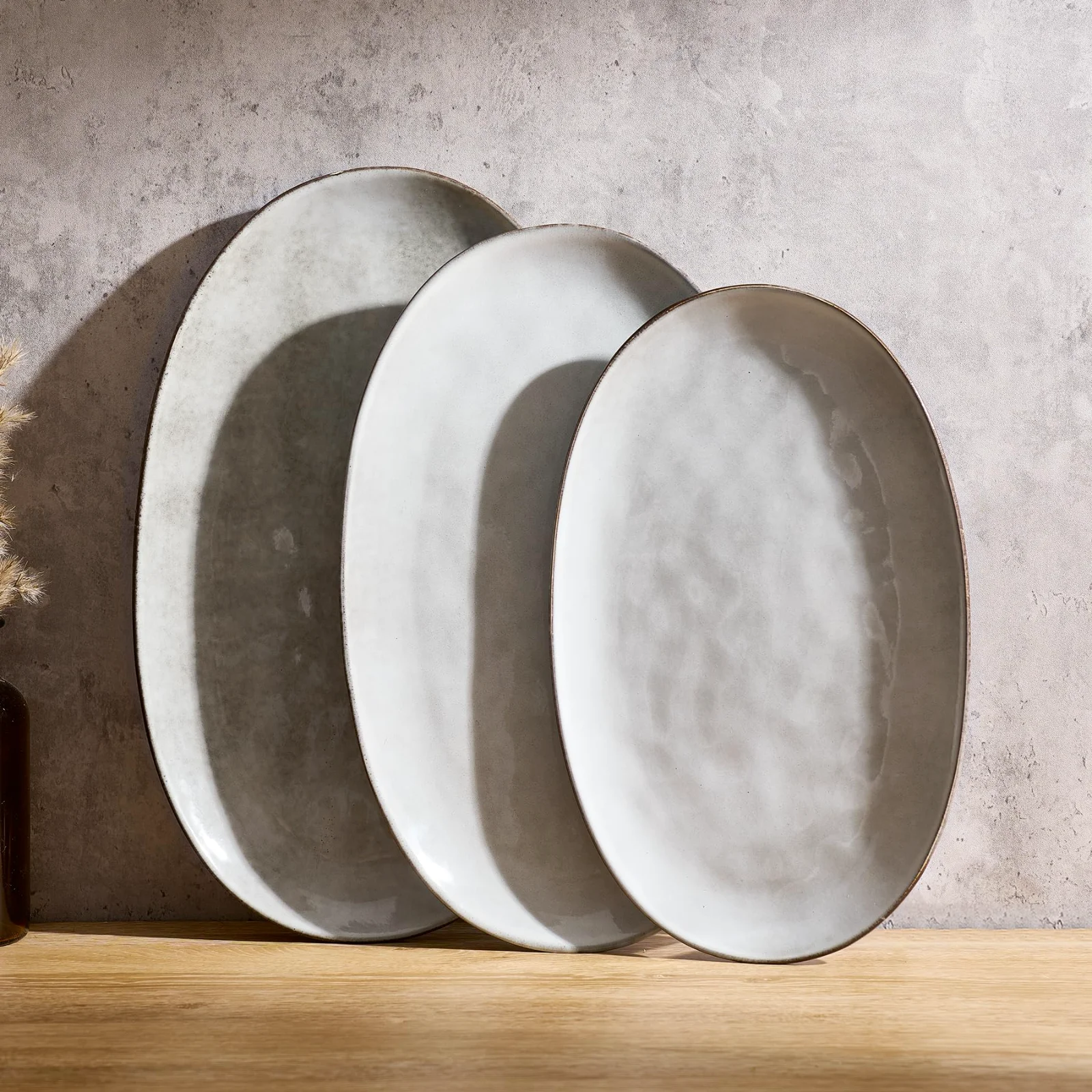
Stoneware starts as clay and ends up as something closer to stone. At the right heat the body vitrifies. That means the clay closes up, it stops absorbing water, and it behaves like stone rather than like a sponge with a skin on it. Vitrification is what gives the piece strength and a sensible weight for everyday use.
The process is thermal, not cosmetic. Clay bodies change their internal structure as minerals melt partially and re-form. That change is what makes the surface hold a glaze and what keeps liquid from wicking into the ware. The word vitrified carries a specific meaning here. It describes a state that is reached by firing at the correct temperature and for the correct time.
For our Star and Milkyway sets the pack states 2340F held for 13.5 hours. That hold matters. Time at temperature lets reactions finish, glassy phases form, and surfaces settle into the look they will keep. If a piece is fired too briefly it can remain porous. If it is fired correctly it will have the utility most people expect from stoneware. The word vitrified sums up those physical changes. It is where clay stops being clay in the way that matters for a plate.
Change the oxides and you change the surface, which is the whole of what separates one collection from another. An ordinary glaze behaves like paint. It gives colour. A reactive glaze is different because it moves under heat. Metal oxides are suspended in the coat. At temperature they separate, they travel, and they gather. The glaze becomes thicker where the piece curves inward and thinner over ledges and rims. That flow is a chemical and physical response. The result is variation in tone and depth of colour across a single plate.
Packs call this a "double reactive glaze." That label is a promise of unpredictability. The packs also say plainly that no two pieces look exactly alike and that hues may differ from those on a screen. Those are not marketing flourishes. They are accurate descriptions of what happens in the kiln. The very movement that makes a reactive surface interesting is the same movement that makes matching pieces impossible to guarantee.
You can read the fault and the appeal side by side. The glaze will pool and form richer colour in wells and hollows. The rim will thin and lighten. Metal oxides can separate into streaks, runs, or clouds of pigment. That is how the appearance becomes unique to each piece. If uniformity is your priority then reactive ware is the wrong choice. If you welcome visual difference, the kiln is doing exactly what it was asked to do.
Speckle is a small feature with a simple origin. Iron present in the clay body can burn through the glaze during firing. When iron reaches the surface it oxidizes or reduces depending on the atmosphere in the kiln and shows as tiny dark spots. These are not defects in the glaze itself. They are the clay body asserting itself through a thin area of coating.
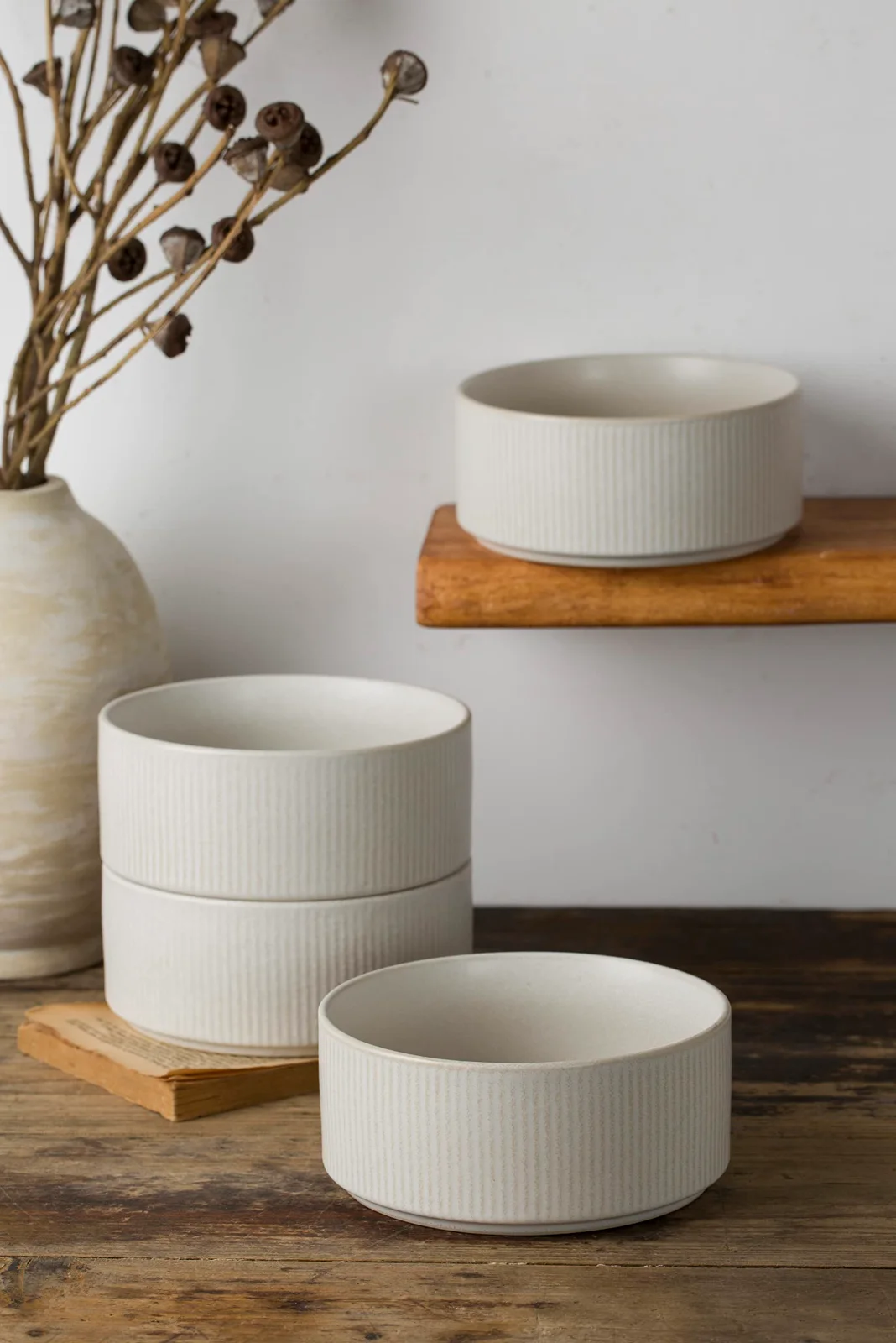
Across our range you will see different surfaces described as speckled, matte, embossed, and ribbed. Speckle is part of that language. It can be sparse and decorative, or it can be a more obvious pattern of tiny marks. Either way it comes from mineral content in the body interacting with temperature and the glaze above it.
Because a reactive glaze moves, it sometimes thins enough at an edge or a ridge for iron in the body to show. Those iron points are stable after firing. They do not indicate contamination or a failure of manufacturing. They are visible evidence of material interaction: clay, metal oxides, and heat. If you are watching a group of plates unfold from their packaging you will quickly see that speckle contributes to the individuality of each plate. It is part of how reactive-glaze stoneware reads as handmade rather than cookie cutter.
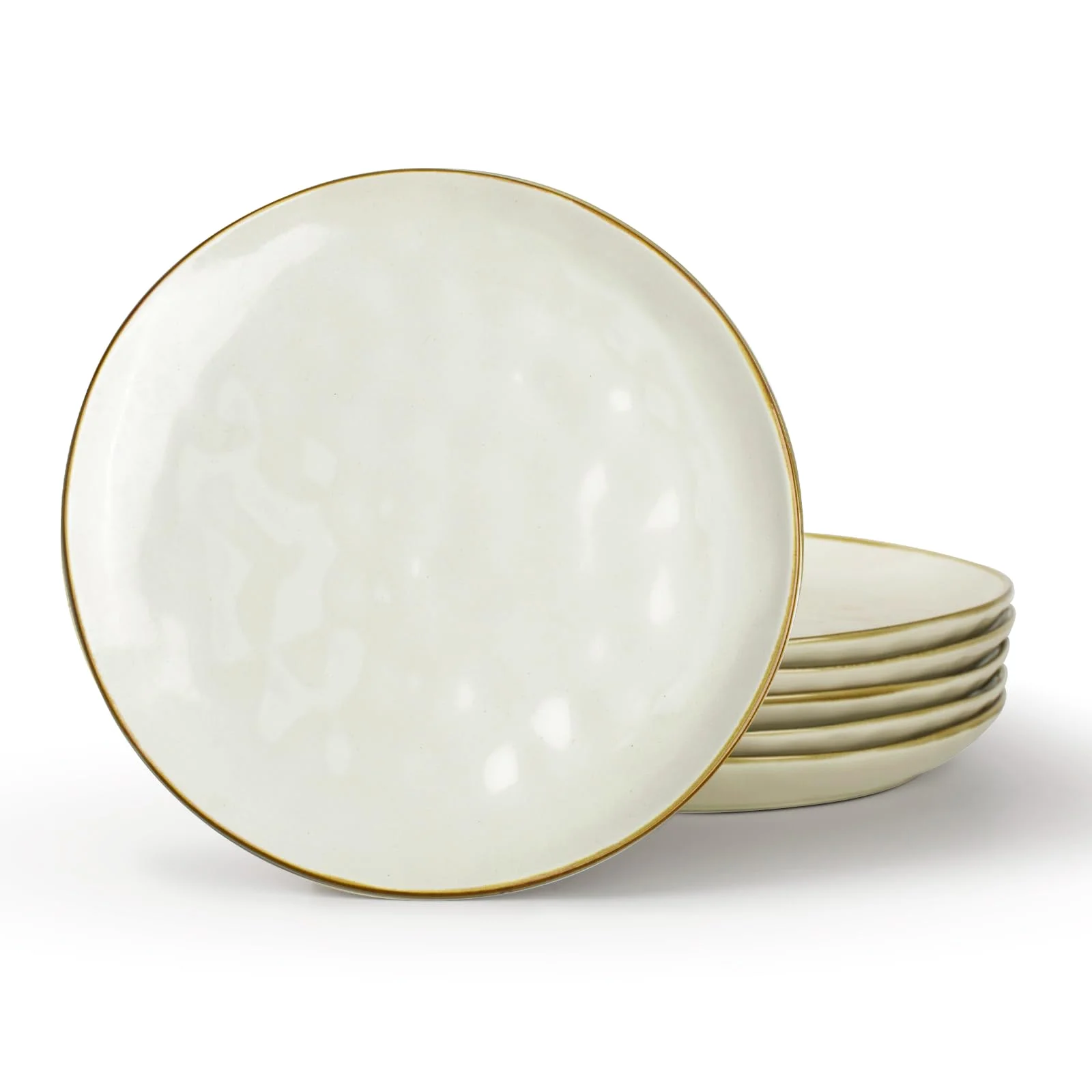
Look at the edge of almost any reactive-glaze plate and you will notice a paler line. That is a predictable outcome. As glaze flows during firing it runs toward lower points and gathers in wells. Along the rim the coat is stretched thin. Where the glaze thins, the color is less saturated and the clay body can show through. The paler rim is the rim telling you how the glaze behaved under heat.
Plate shapes make a difference. Rimmed plates such as Jupiter, Saturn, and Venus have a distinct flat lip where glaze is likely to thin. A coupe shape, by contrast, curves to the very edge with no flat lip, and the transition of glaze will read differently. The same glaze on a coupe will still move, but the distribution of colour will be informed by shape.
This is not a flaw unless you ordered precise tonal matches. It is intrinsic to reactive chemistry and to gravity in the kiln. If two pieces are fired in slightly different positions on a shelf they will meet slightly different thermal and gas conditions and the rim treatment will not be identical. The paler rim makes each plate legible. It is evidence of movement, of boundary, and of the clay body beneath the glass that the glaze becomes.
Every plate has a foot ring and that ring is left bare on purpose. The unglazed band allows the piece to release from the kiln shelf instead of fusing to it during firing. If the foot were glazed the molten surface could stick to the shelf and ruin both plate and kiln furniture. Leaving the foot ring unglazed is a functional decision.
Bare clay grips a table. It also marks a glazed plate stacked under it. That is a practical consequence rather than a mistake. The bottom will be rough compared with the glazed face. You may feel tool marks, slight irregularity, and the natural texture of the body. Those are signs of the manufacturing process that allow the ware to be fired and handled reliably.
Some customers mention the roughness of the bottoms. One buyer put it this way: "The white is a bit greyish, the bottoms are rough and scratch so I'll need to buy something to place in-between these." That quote points to a real trade off. We leave the foot bare to protect the piece in the kiln. The same choice means the bottom behaves differently on a tabletop than the glazed surface does. If you intend to stack glazed plates directly on top of one another consider a thin barrier to avoid marking.
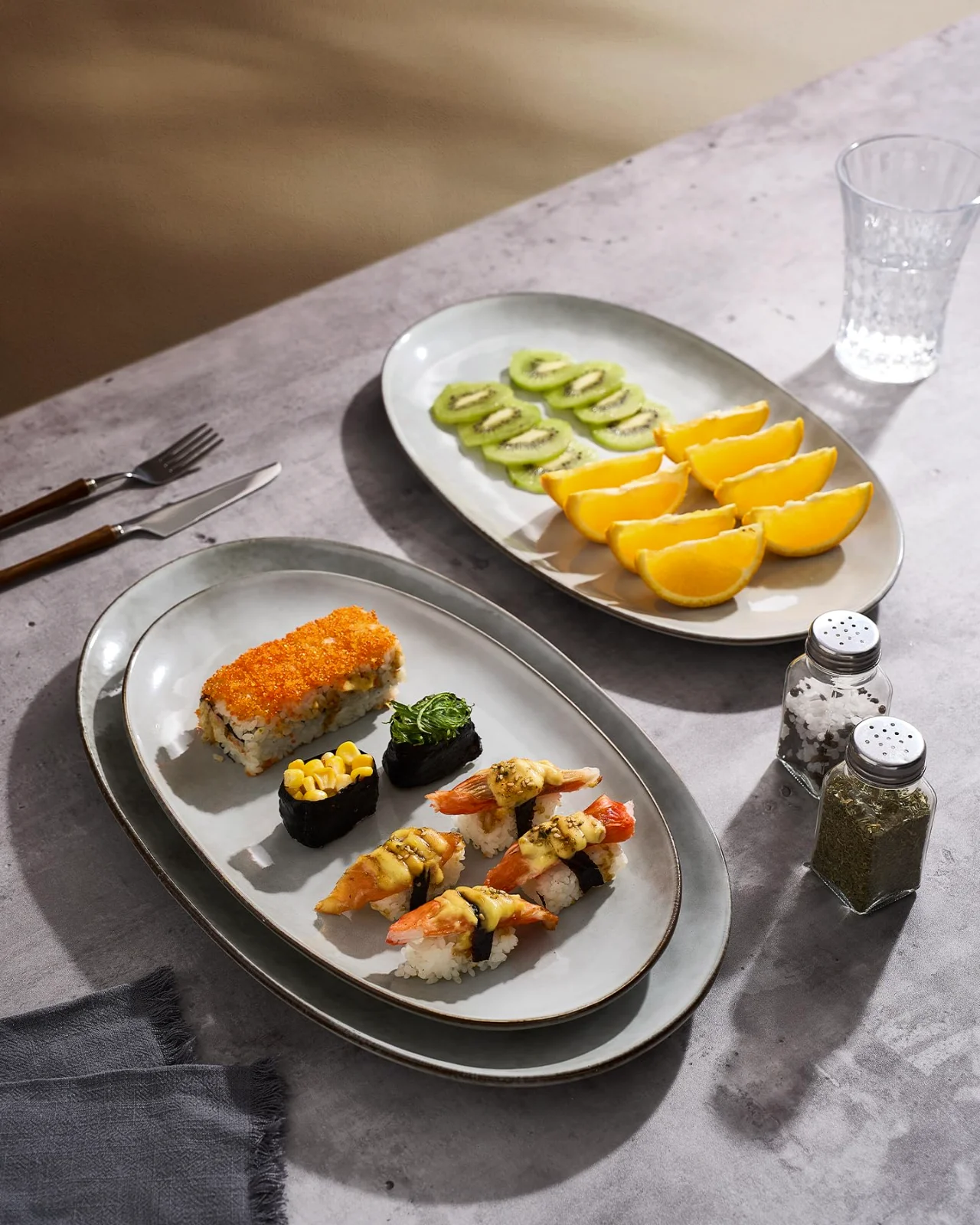
Photographs are useful. They are not complete. A screen compresses light and flattens depth. Colours render differently on different devices. Reactive glazes show nuance that a single photo cannot capture.
| What you see in the photograph | What arrives | Why |
|---|---|---|
| Even, uniform colour | Variation in hue from piece to piece | The pack calls the finish "double reactive glaze" and reactive glazes separate and travel in the kiln |
| A smooth, identical rim on every plate | Rims that are paler, with tone shifts | Glaze thins over rims where the clay body may show through |
| No surface texture visible | Speckled or matte areas, embossed or ribbed textures | Iron in the clay body can burn through, and the range includes speckled, matte, embossed and ribbed surfaces |
| Shiny underside | A bare, rough foot ring | The foot ring is left unglazed so the piece releases from the kiln shelf instead of fusing to it |
A photograph cannot tell you how the glaze pooled in the well of a plate, or whether a small run formed on one item and not the next. It cannot convey the tactile difference between a matte and a glossy patch. Packs warn that hues may differ from those on a screen. That warning is not a legalistic hedge. It describes the physical limits of a photo.
Variation has to be separated into two categories. The first is aesthetic and intended. That includes colour shifts, speckle, paler rims, and the absence of exact twins. The packs state that no two pieces look exactly alike. Those outcomes are within specification. The second category is functional or safety related. Those instances are faults.
A fault is a structural failure that affects use. A cracked body, a glaze that flakes off exposing raw clay in a way that could contaminate food, or shards that form sharp edges are all faults. Excessive warping that prevents a plate from sitting flat is also a fault because it interferes with function. Crazing, where a glaze develops a web of hairline cracks, can be a complex case. It is an aesthetic condition linked to differential movement between body and glaze. Regulators caution about handmade, crude, antique, damaged, or brightly decorated ware rather than about commercially fired factory tableware. Public standards indicate that, when ware is fired at proper temperature for the proper length of time, essentially all the lead in a glaze binds into the glaze itself and migration into food is insignificant. No regulation permits cadmium on a food-contact surface at all.
If you find something that is fractured, that has sharp protrusions, or that clearly compromises the integrity of the piece, that is not character. That is a legitimate reason to raise the case with your point of purchase. For every other kind of variation the answer is usually material interaction and kiln dynamics rather than a manufacturing error.
"They do not stack evenly or look like perfect cookie cutter plates, but that is what I wanted. If you want uniform perfection, look elsewhere." — one buyer
Reactive-glaze ware is opinionated. It will not pretend to be neutral territory. Surfaces argue with cutlery, with sauce, and with light. That is part of the relationship.
Most lines state dishwasher and microwave safe. Oven and freezer are stated line by line. Those pack notes are the place to check if you want to use a particular finish in extreme temperatures. Because the foot ring is unglazed, stacking glazed plates directly on top of one another can lead to marking. A thin felt pad or paper separator will prevent scratching and reduce the chance of surface abrasion when objects move in a crowded cupboard.
If the bottoms feel rough to you, that is to be expected. If the white reads slightly greyish, that too is within the range described on the pack. If you prize identical plates, reactive glaze is not the right material. If you enjoy small differences and the visual evidence of heat and mineral, then these pieces will repay daily use by remaining interesting. The trade-offs sit on the cards: every piece prints its glaze type and its surface, so the choice between colour, texture and practicality is made before the box arrives rather than after.
01Next
Same subject from a different side.
A service for four is exactly four of each piece. What that means on a Sunday, in a dishwasher rack, and on a cupboard shelf that was measured for the last set.
The rim goes first, and the chip shows pale clay. Where the damage starts, which habits cause it, and the line between a piece you keep using and one you stop eating off.
Every Famiware size, every glaze
Every diameter, capacity and glaze in the Famiware lineup sits behind this button, with the price we last read against each one.