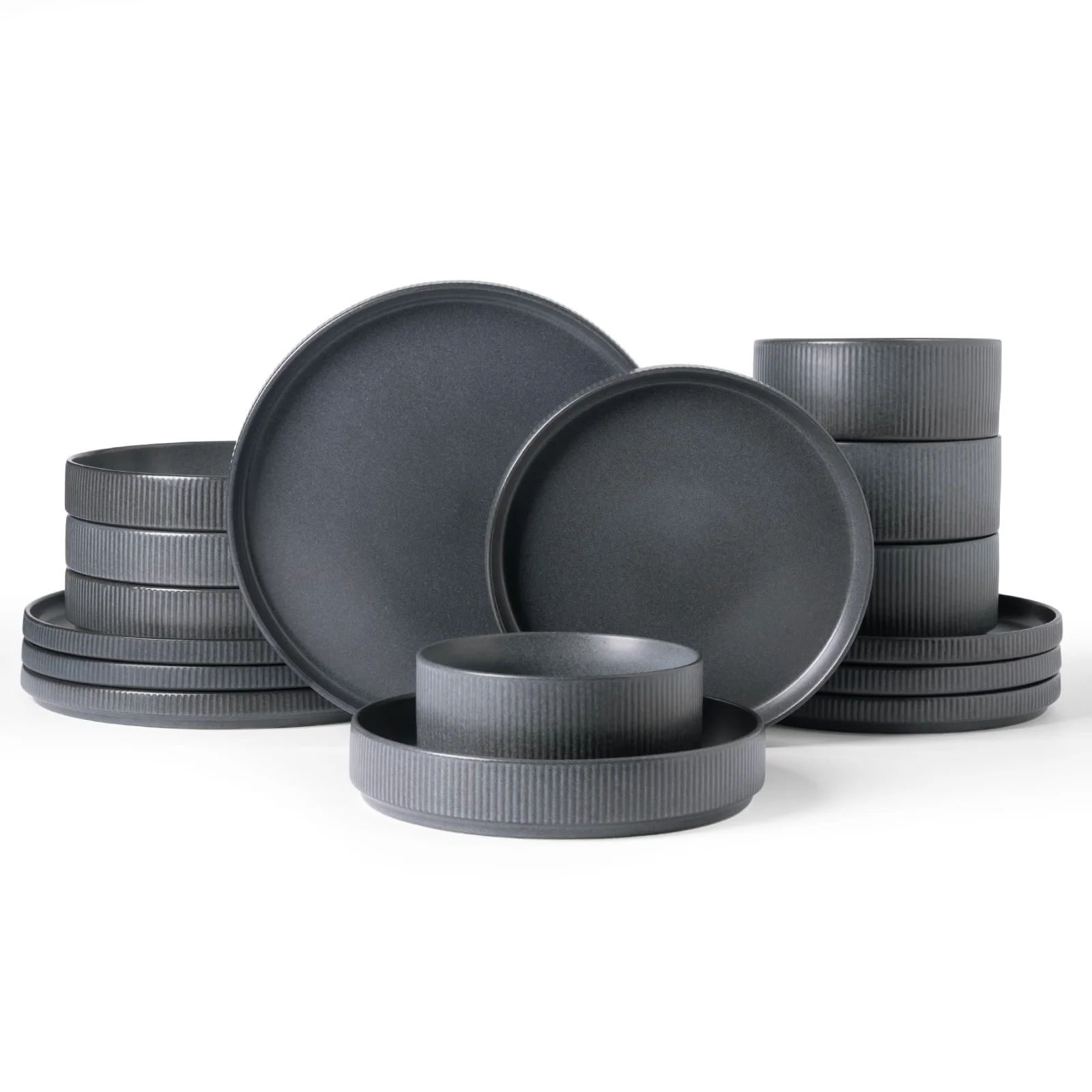
Star
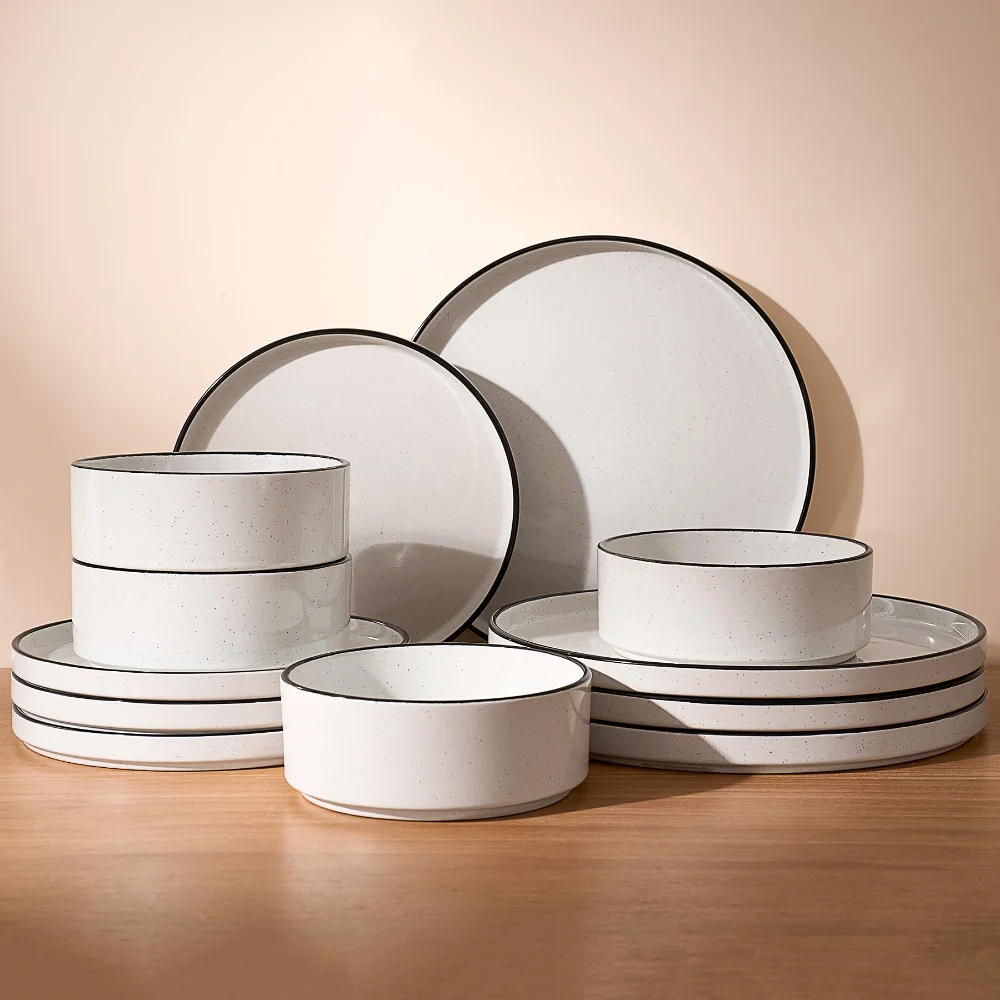
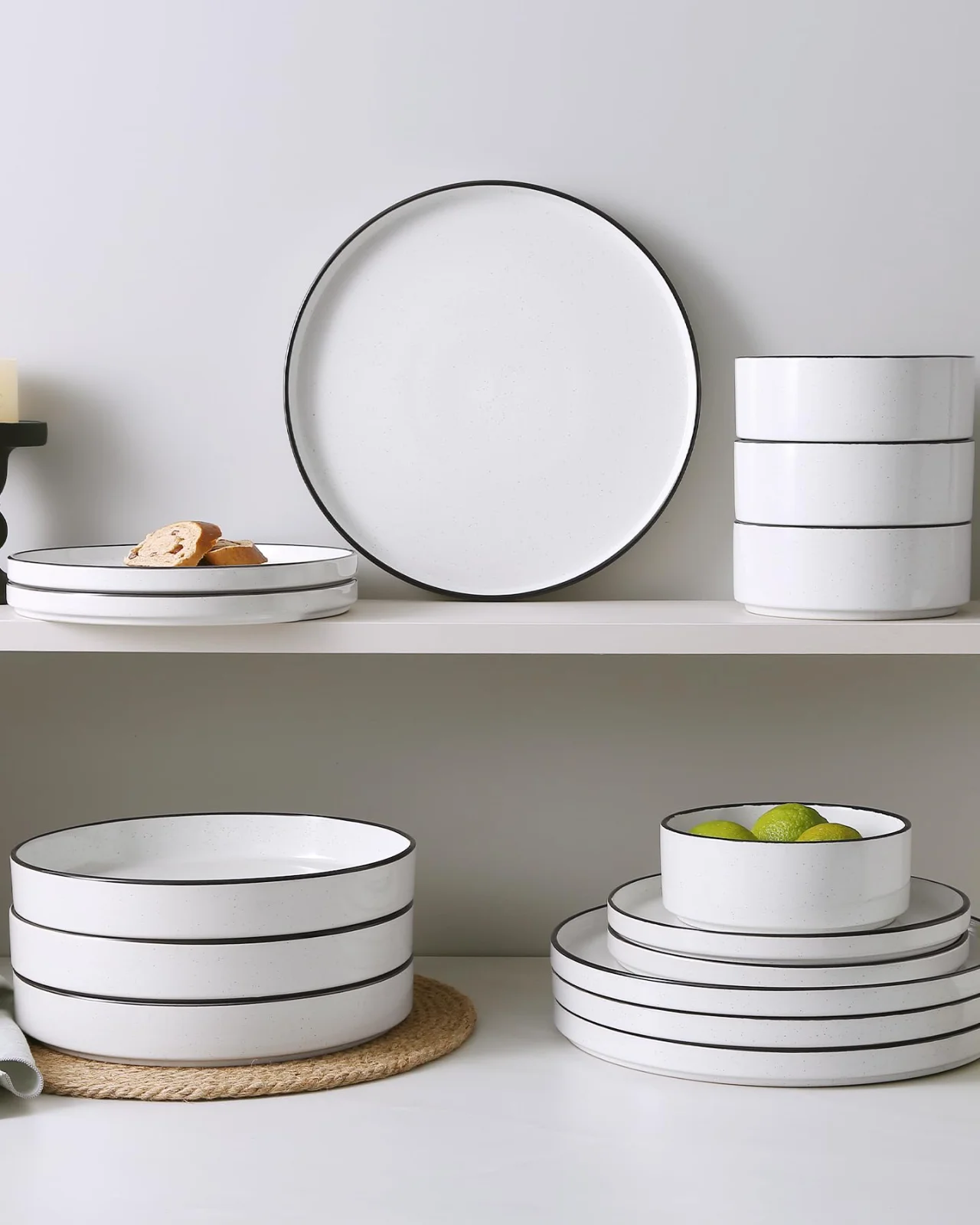
Star Stoneware Dinnerware Sets with Pasta Bowls, 16-piece
- 16 pieces in the box
- Serves 4
4.6 · 1,585 ratings
from $109.99
01Stoneware you can put in the oven, the microwave and the dishwasher
You are buying plates you cannot pick up first. So every piece on this site carries the numbers that decide it — how wide across, how deep, how many in the box, what one plate works out at — and the glaze is photographed as it comes out of the kiln rather than as it renders.
Twenty-one collections, six shelves, and a colour that moves in the firing so that no two plates in your stack match.
Star Stoneware Dinnerware Sets with Pasta Bowls, 16-piece16 pieces in the box · from $109.99
02Six shelves
A dinner set answers a table with nothing on it. The other five shelves answer the gap you find later: one more bowl, a mug that takes cream, a platter that reaches the middle.
Six shelves, one clay body, and every piece on all of them belongs to the Famiware shelves.
03What leaves the shelves first
Four from each corner of the range, dealt down this page in four blocks. Every card shows its piece count, its diameter and its price before you click.
Star
4.6 · 1,585 ratings
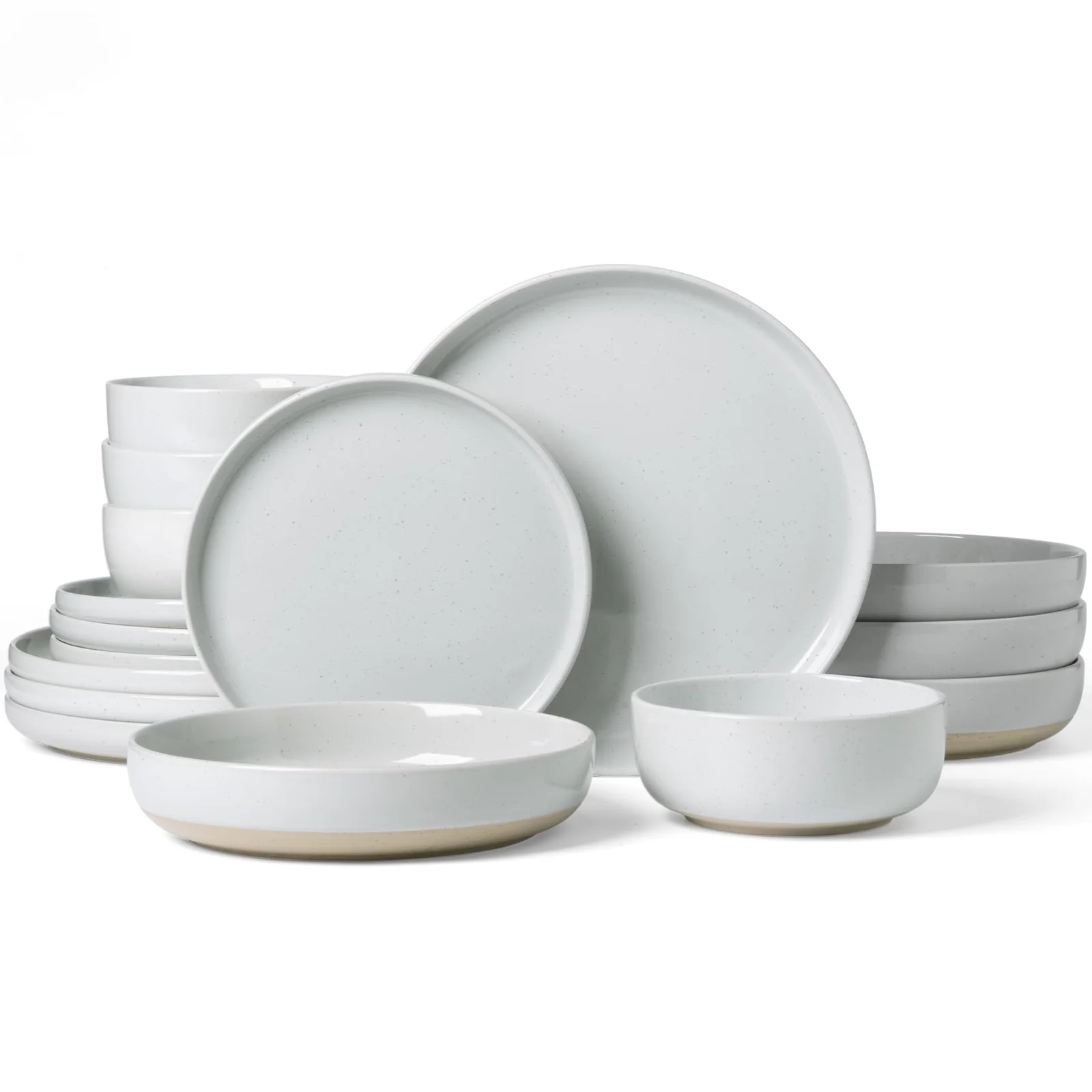
Milkyway
4.5 · 1,364 ratings
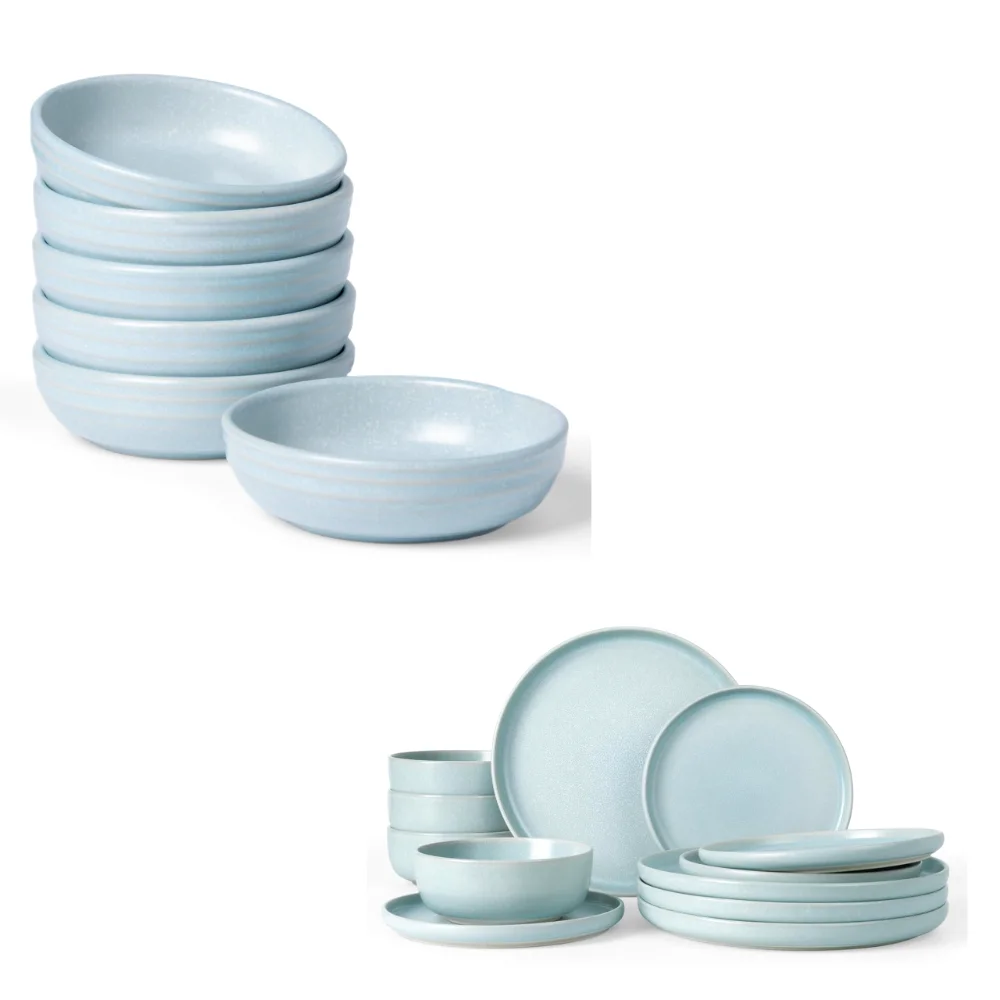
Pluto
04How a reactive glaze behaves
A reactive glaze is mixed to move. Put it in the kiln and the minerals in it separate, pool and settle differently on every piece, and that is the whole point of it.
Ordinary glaze is a colour. A reactive glaze is a reaction: metal oxides suspended in the coat break apart at temperature and travel, gathering thicker in the well of a bowl and thinning over the rim, where the clay body shows through as a paler line. The pack for the Star and Milkyway sets puts the firing at 2340°F held for thirteen and a half hours, and that long soak is what fuses the coat into glass rather than leaving it sitting on top as a skin.
What you get is a plate with a rim a shade lighter than its centre, speckle where iron in the clay burned through, and a foot ring left bare so the piece does not fuse to the kiln shelf. That bare ring grips a wooden table and marks a glazed plate stacked below it, and both are true at once. If you want six plates that match like pressed porcelain, this is the wrong material, and we would rather say so here than have you find out on a Sunday.
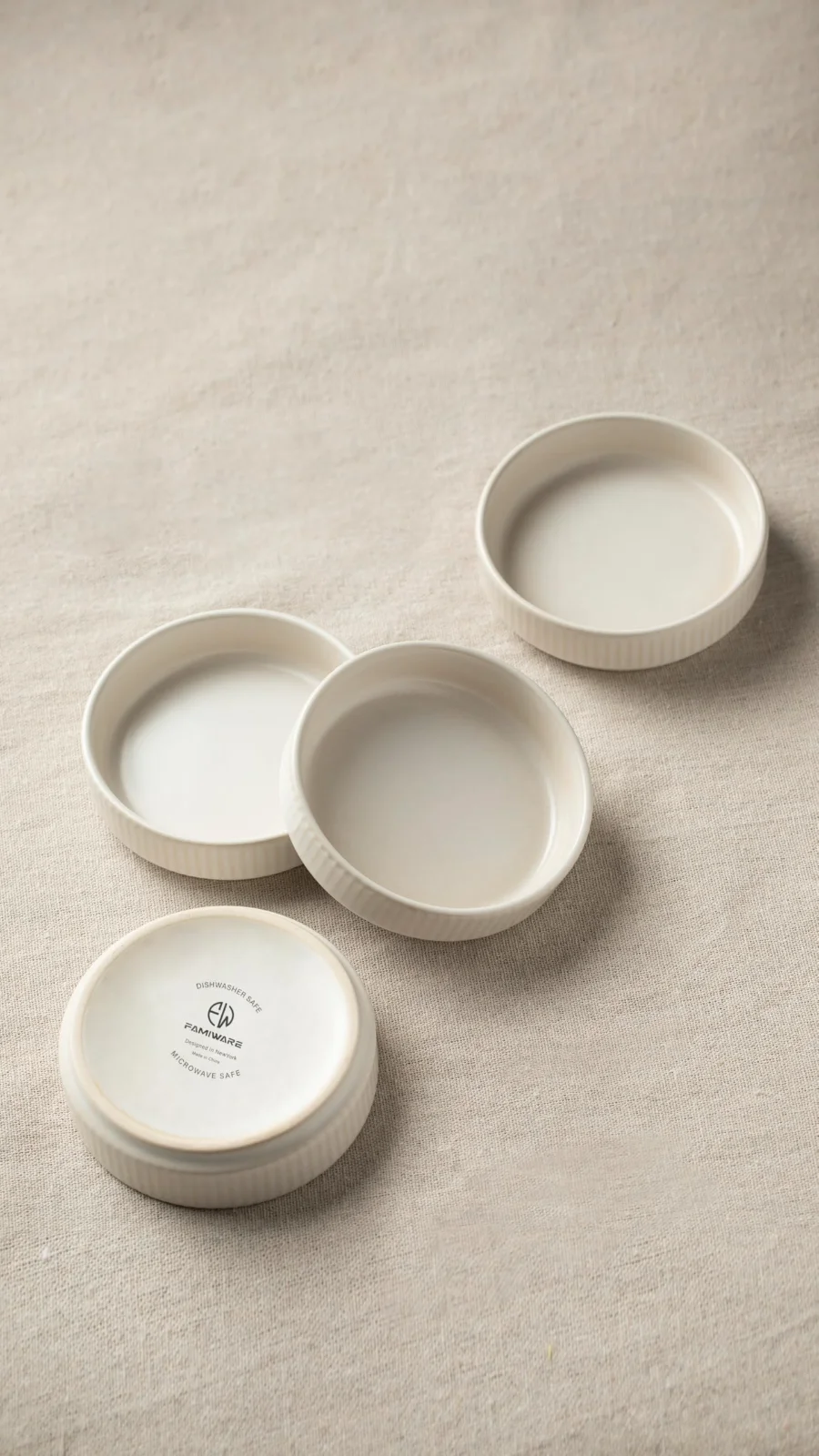
Colour pools at the rim, speckles come from iron in the clay body, and the foot ring stays unglazed so the piece releases from the shelf. Screens flatten all three: the glaze you unwrap will sit a little away from the glaze you clicked.
05Coffee, tea and the mug that holds it
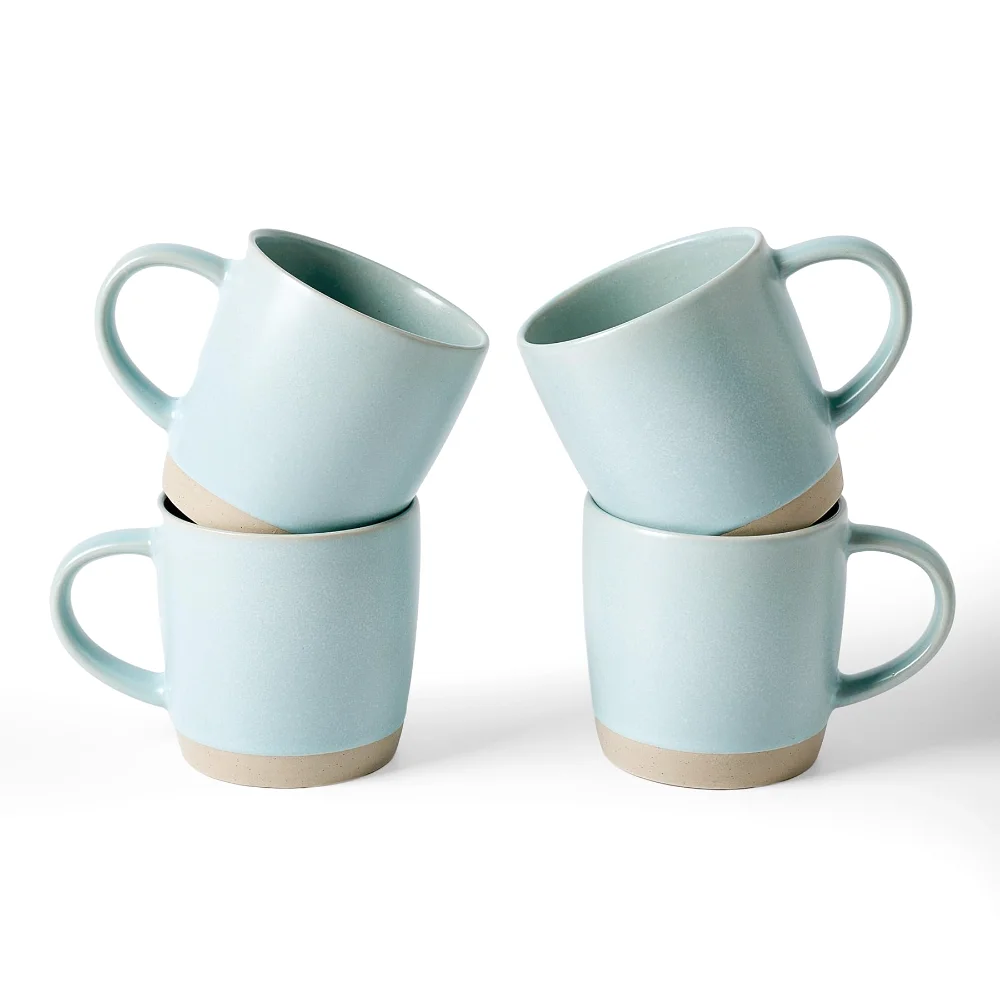
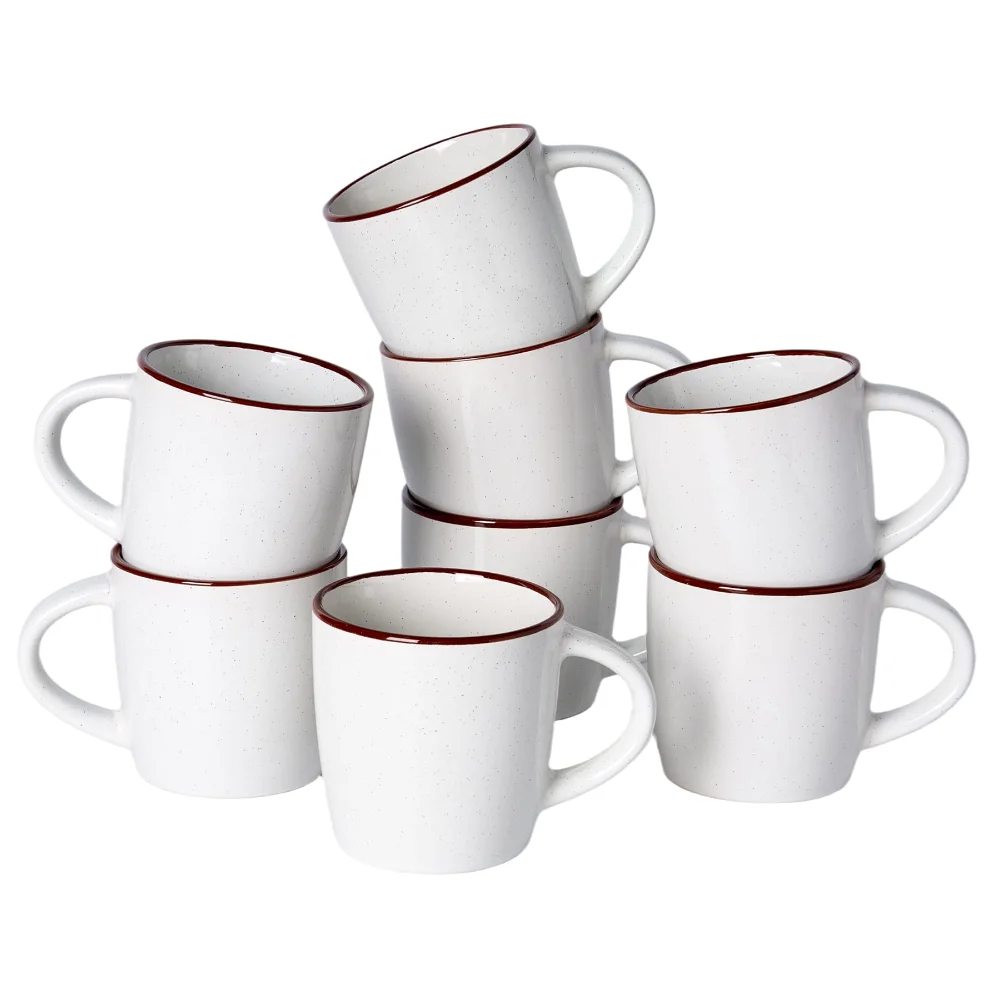
Eleven to fourteen ounces across this shelf, and the two at the top of that range are the ones people keep. Every card prints the capacity, because a mug is bought by volume and sold by photograph.
Capacity decides this shelf, and every mug in the Famiware catalogue carries it on the card.
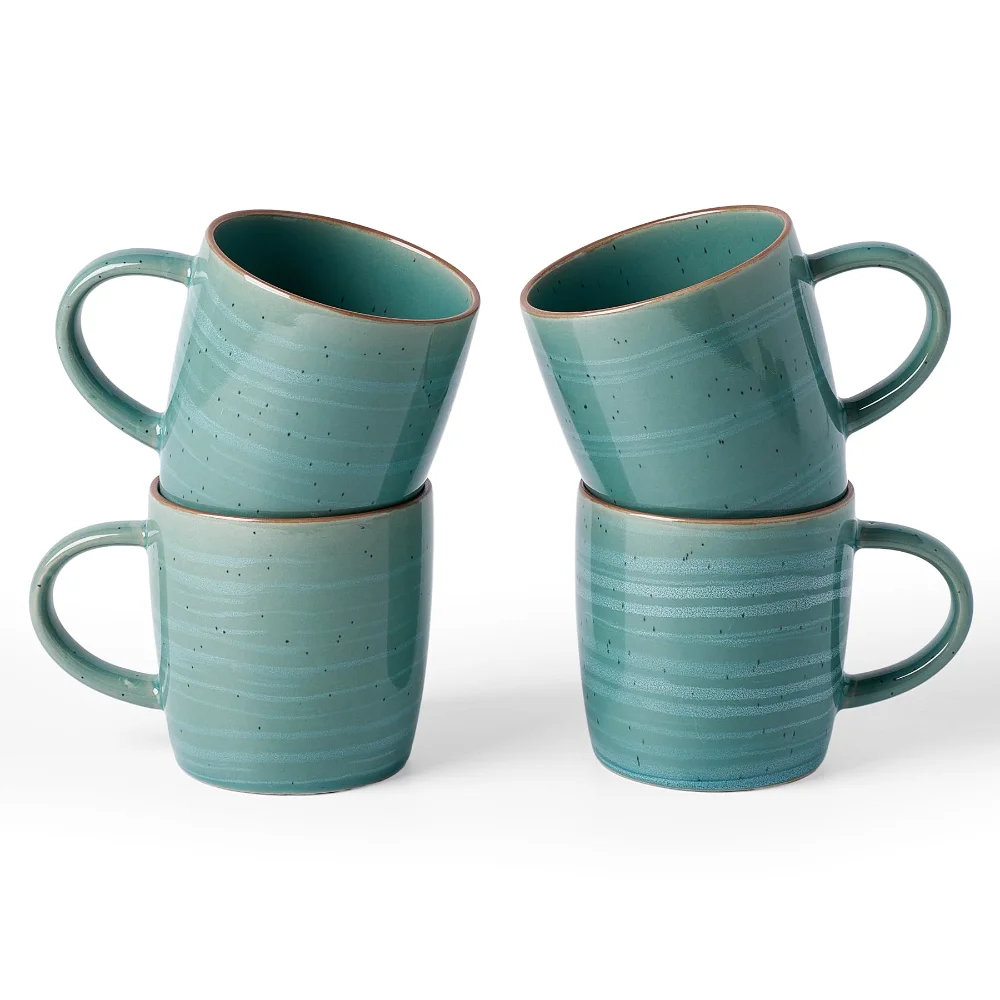
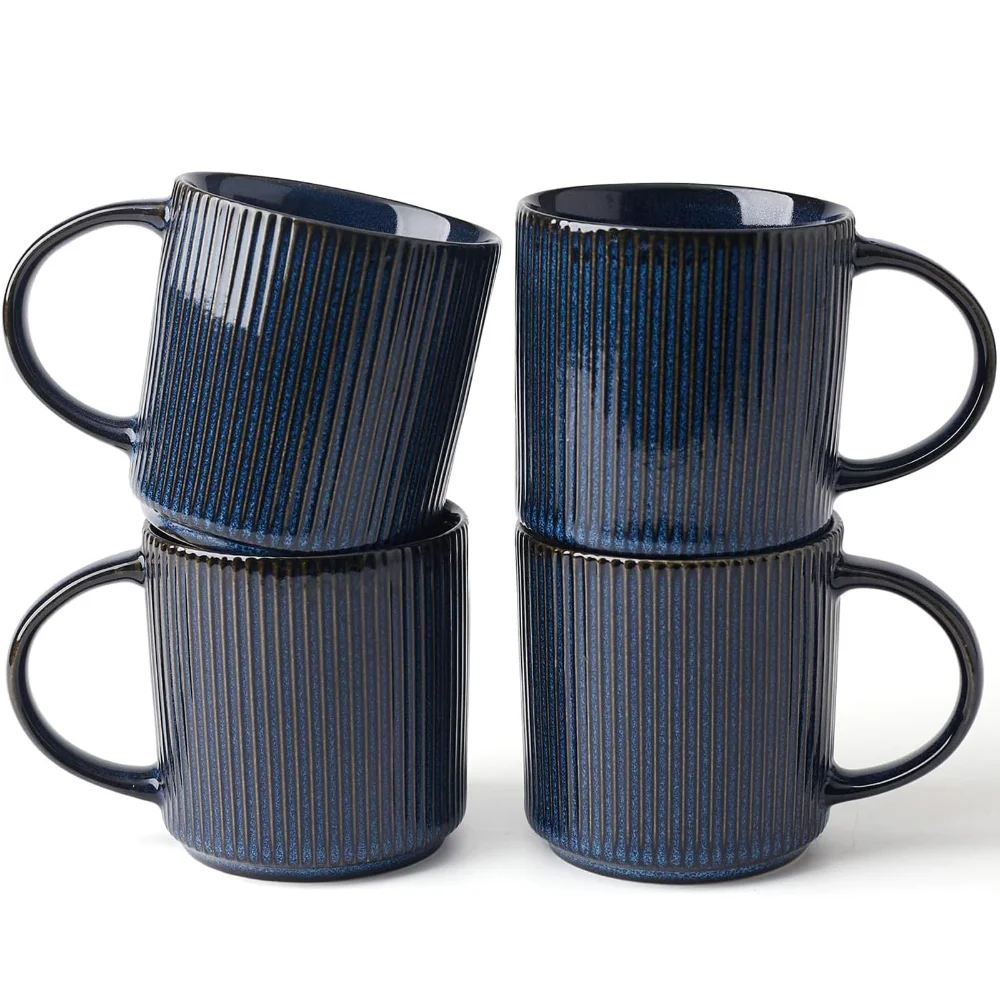
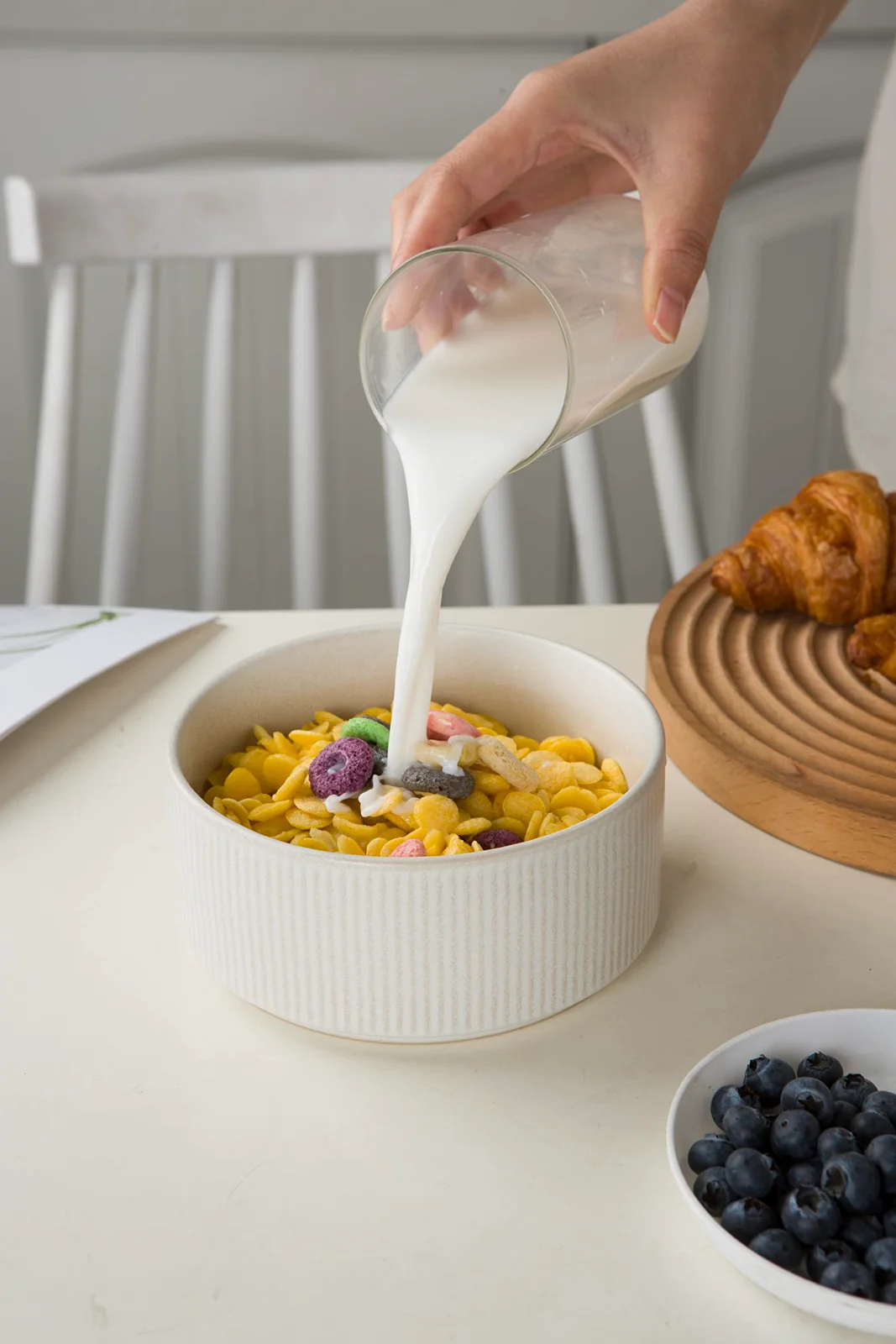
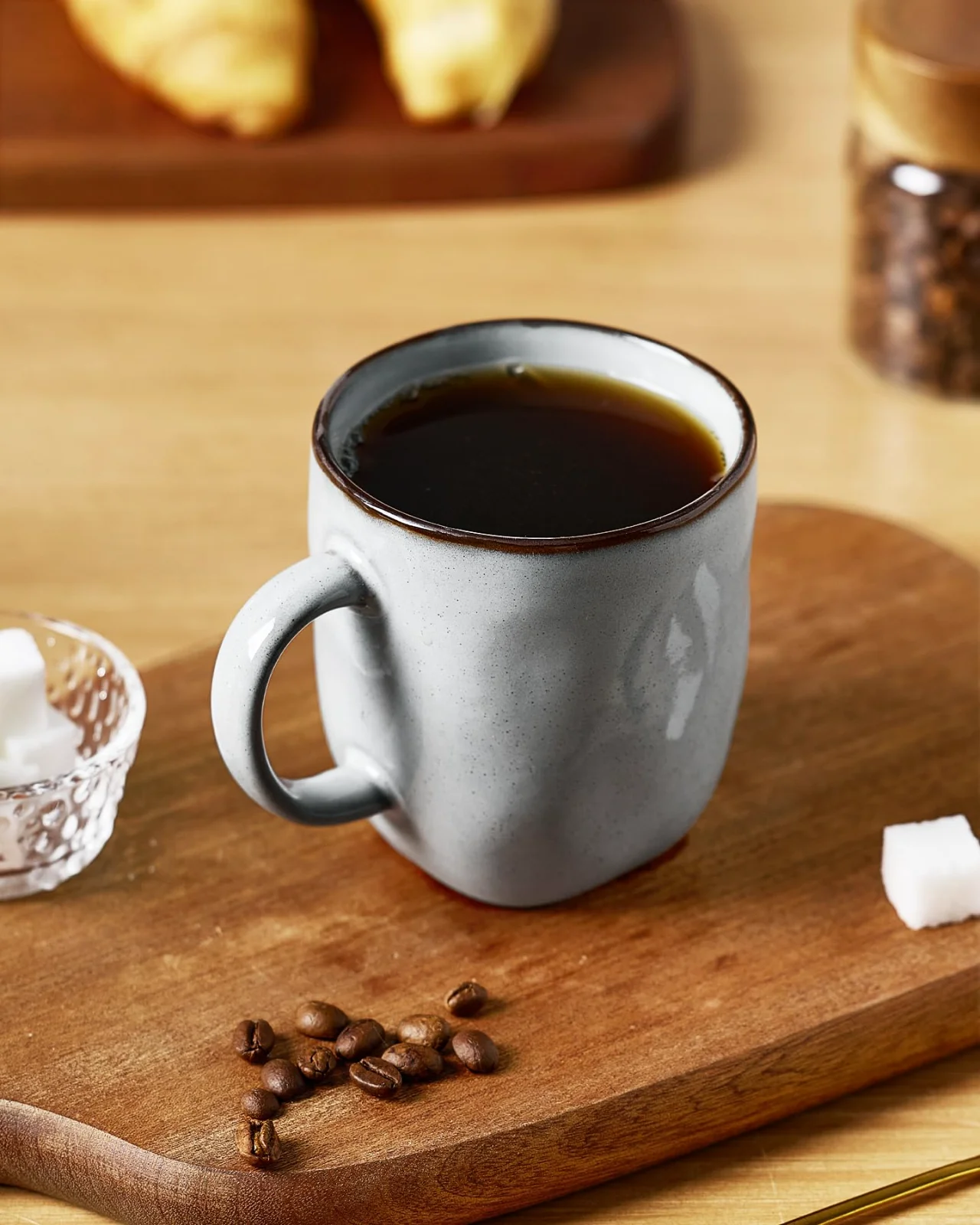
06On a table, not on a white sweep
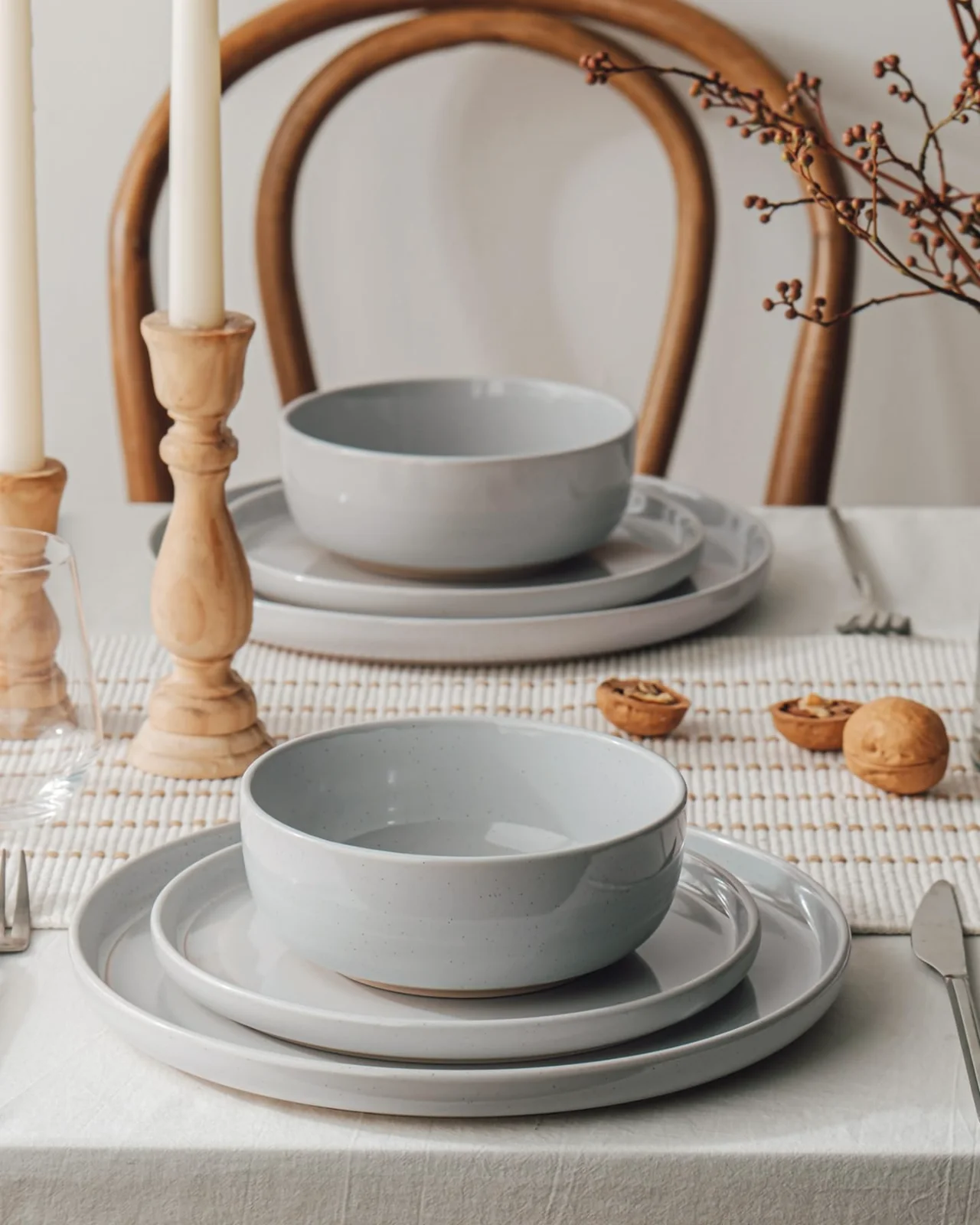
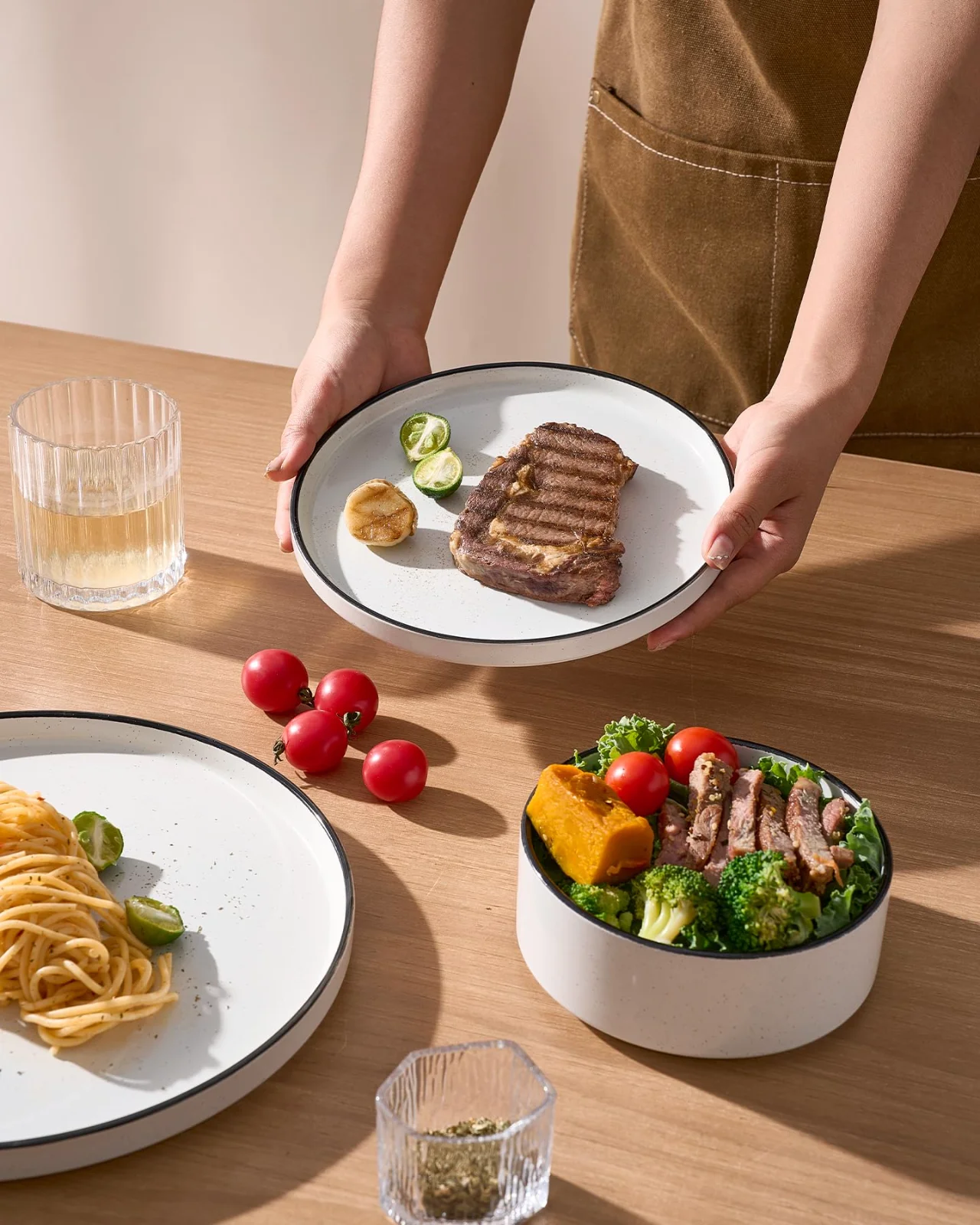
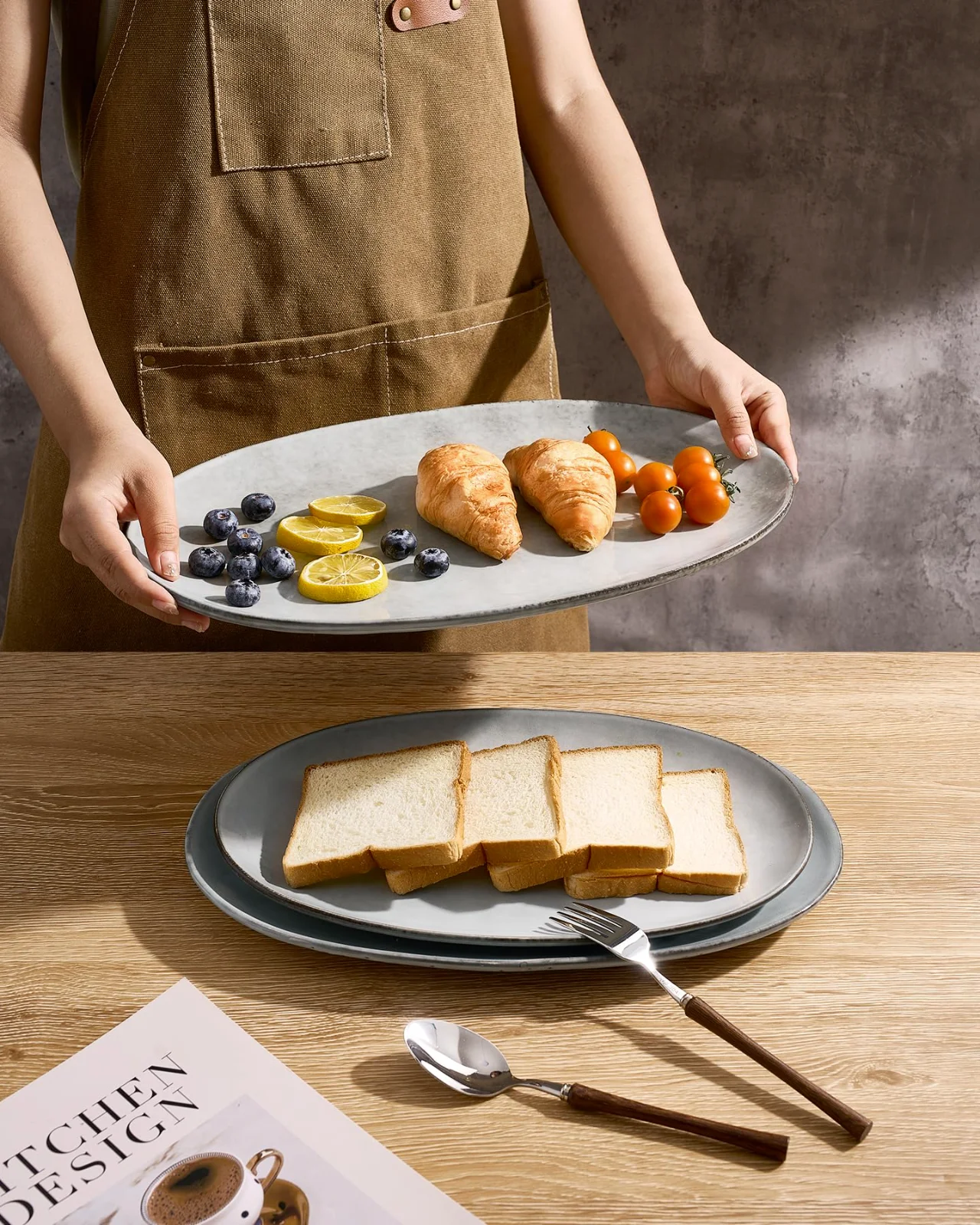
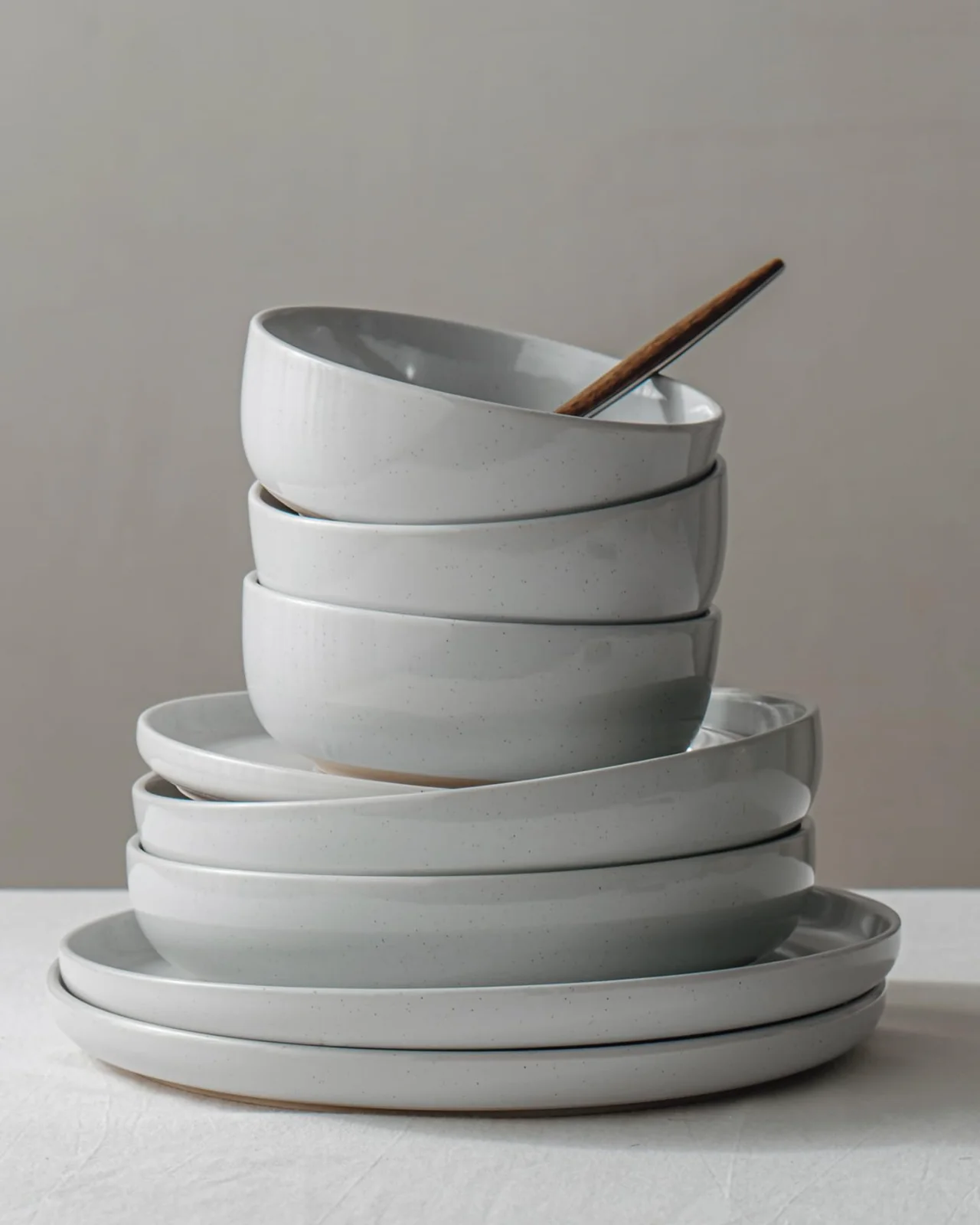
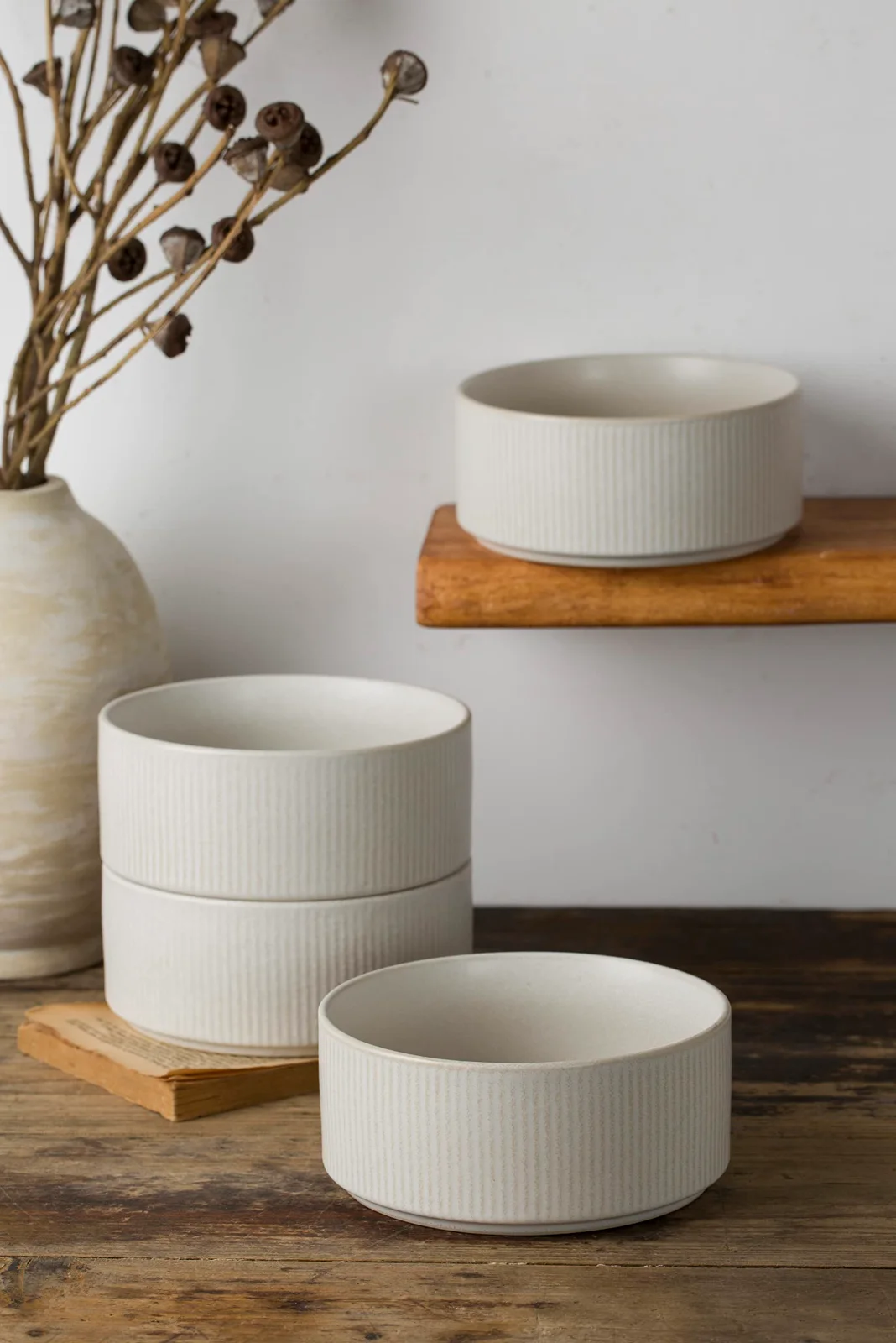
Famiware clay doing ordinary work: breakfast, a coffee, a platter carried in one hand, olives in a dish four inches across.
07What it is made of
Clay fired hot enough to vitrify: the body closes up, stops drinking water and behaves like stone. That is why a Famiware bowl carries soup out of a microwave without softening, and why it is heavier than the set it replaced.
Every Famiware body is fired until the clay closes. It does not absorb the tomato sauce it sat in overnight, and it does not craze into a web of hairlines the first winter.
A dinner plate here lands somewhere between a café plate and a cast-iron lid. Buyers rate that as quality until the day they load a full stack one-handed.
Left bare so the piece releases from the kiln shelf. It grips a table and it will mark the plate below it, which is why two-high is the honest stacking advice.
Pooling at the rim, speckles through the body, and a shift from box to box. The glaze names run to 185 across the range, and each is a recipe rather than a paint chip.
| What the pack says | What it means at home | |
|---|---|---|
| Dishwasher | Safe on nearly every line | Top or bottom rack. The unglazed foot stays damp longest, so it comes out last. |
| Microwave | Safe on nearly every line | The body heats with the food. A flat-bottomed plate has no lip to hook a finger under — use a cloth. |
| Oven | On some mugs, bowls and platters only | It is stated line by line, and it is not a property of stoneware as such. A mug rated for the oven does not make the platter beside it oven-safe. |
| Freezer | On some lines | Cold to hot in one move is what cracks stoneware. Let a frozen piece stand before it meets heat. |
| Glaze | Lead-free and cadmium-free | A statement of compliance rather than a feature: cadmium was never permitted on a food surface. |
Nothing in the Famiware way is asked to do two jobs at once, which is why the care line sits on the card beside the size.
08Wide and shallow, or deep and steep
A pasta bowl spreads 33 ounces flat across eight inches; a cereal bowl stands the same volume up inside five and a half. Most sets ship one or the other, so this is the gap people fill second.
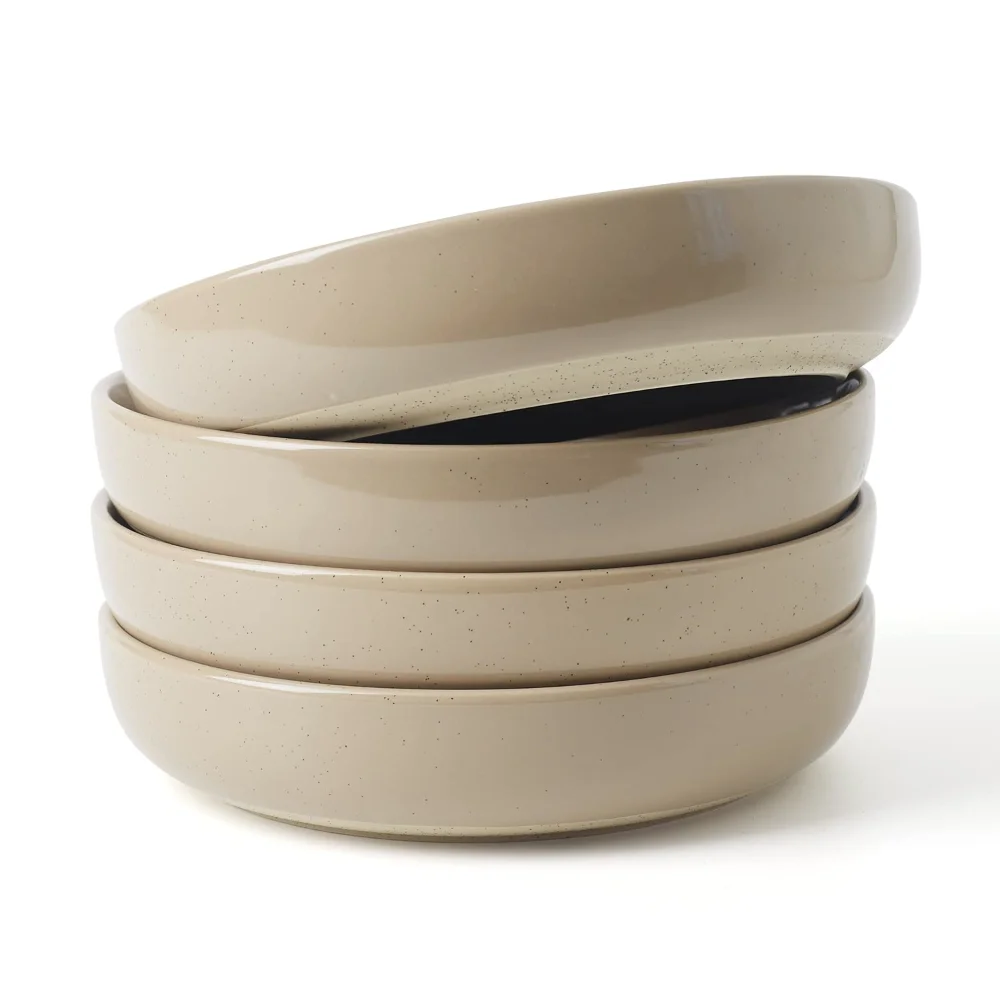
Milkyway
4.7 · 1,127 ratings
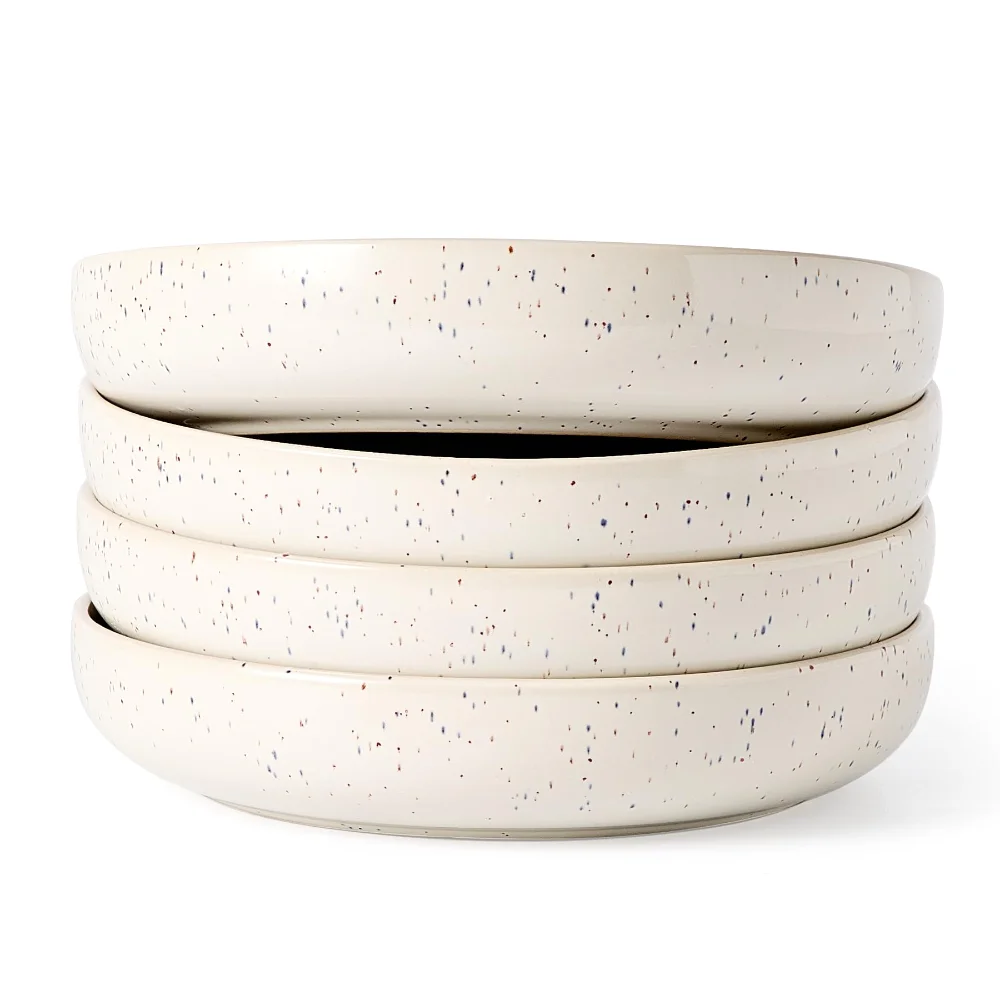
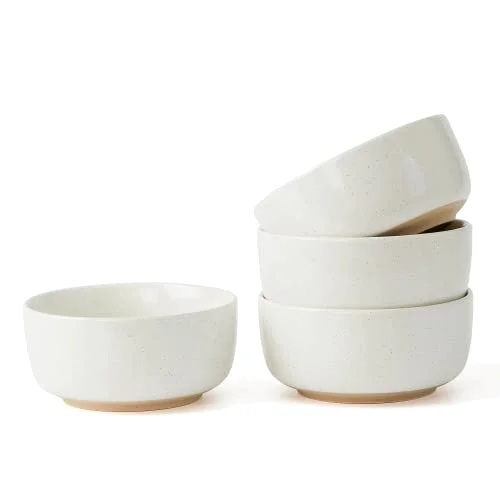
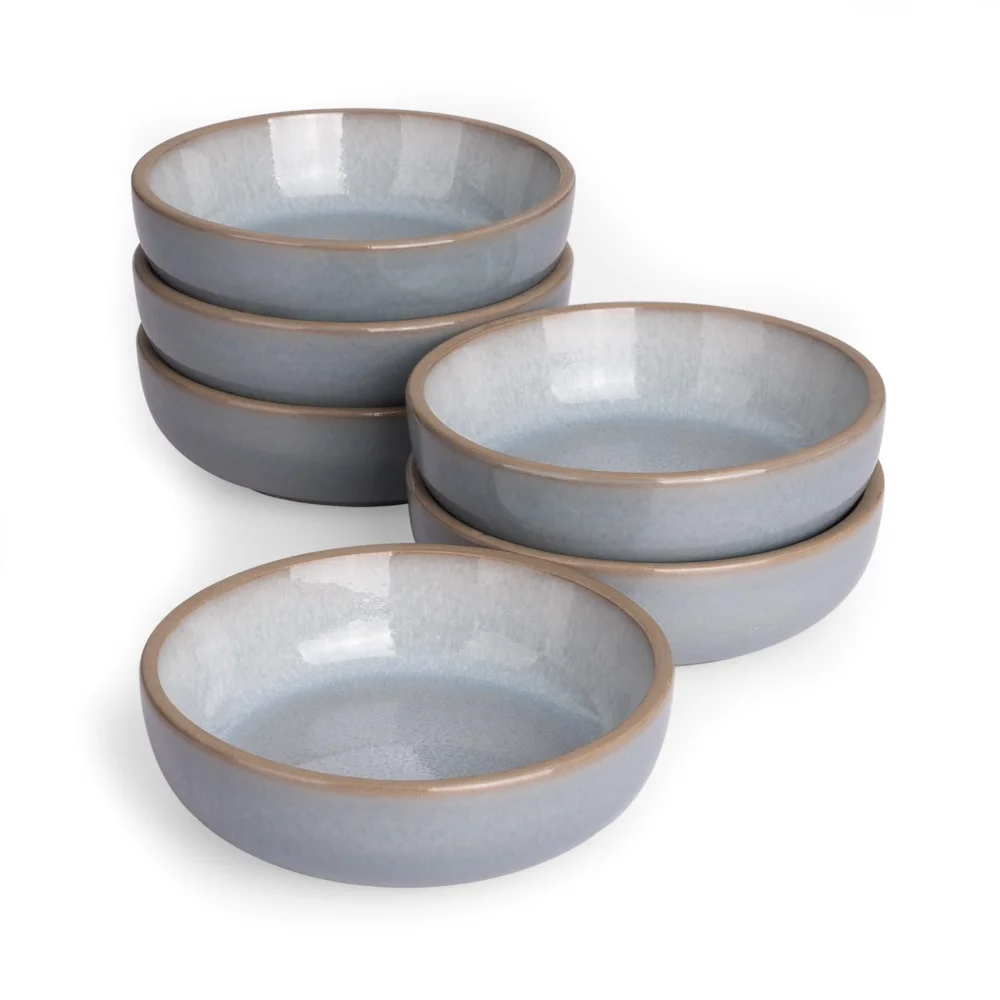
09Ninety seconds
Rim, foot ring, the way a Famiware glaze pools, and the stack. Sound off loses you nothing.
10What you are choosing between
People shop dinnerware material by material and find out afterwards what it does in a dishwasher. Here is that comparison, including the two rows where stoneware loses.
| Reactive-glaze stoneware | White porcelain | Bone china | Melamine | Earthenware | |
|---|---|---|---|---|---|
| Fired to | Vitrified; the Star and Milkyway packs cite 2340°F for 13.5 hours | Vitrified, usually hotter | Vitrified, hottest of the four | Not fired — moulded plastic | Lower; the body stays porous under the glaze |
| Weight in the hand | Heavy, and buyers notice | Medium | Light for its strength | Very light | Medium to heavy |
| Colour across a set | Moves piece to piece by design | Uniform | Uniform | Uniform | Fairly uniform |
| Microwave | Yes on nearly every line here | Yes | Not with a metal band | No | Usually |
| How it fails | Chips at the rim, and the chip shows pale clay | Chips small and white | Cracks rather than chips | Scratches and stains, then dulls | Crazes, then stains through the crazing |
| A setting for four | $12.50 to $34.48 for a 12-piece set here | Wide, and mostly higher | Highest | Lowest | Low |
Two rows there go against us: this is the heaviest of the five in the hand, and it is the one whose chip shows. Everything in Famiware tableware is priced with both of those on the table.
11Plates on their own, and what reaches the middle
Plates sell in sixes because a set runs two short after a year. Serving pieces sell because nothing in a dinner set is big enough to put in the middle.
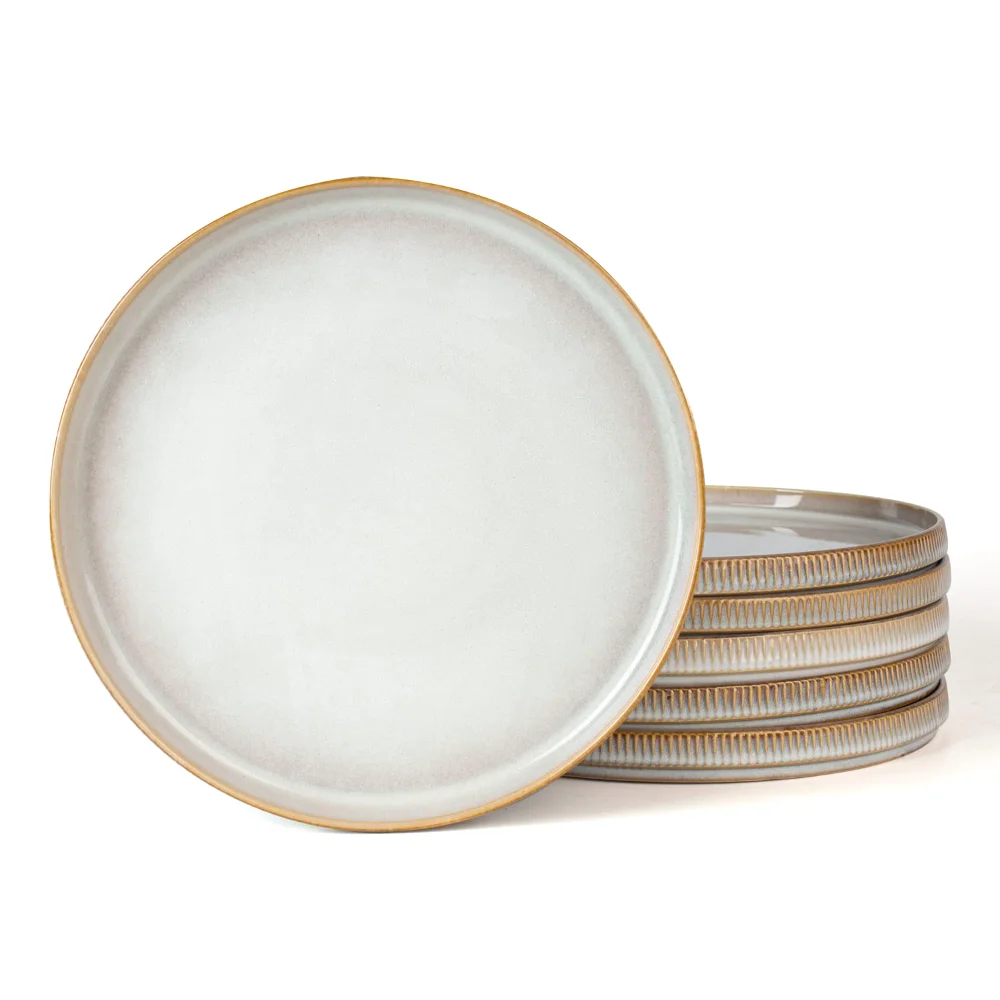
Star
4.6 · 359 ratings
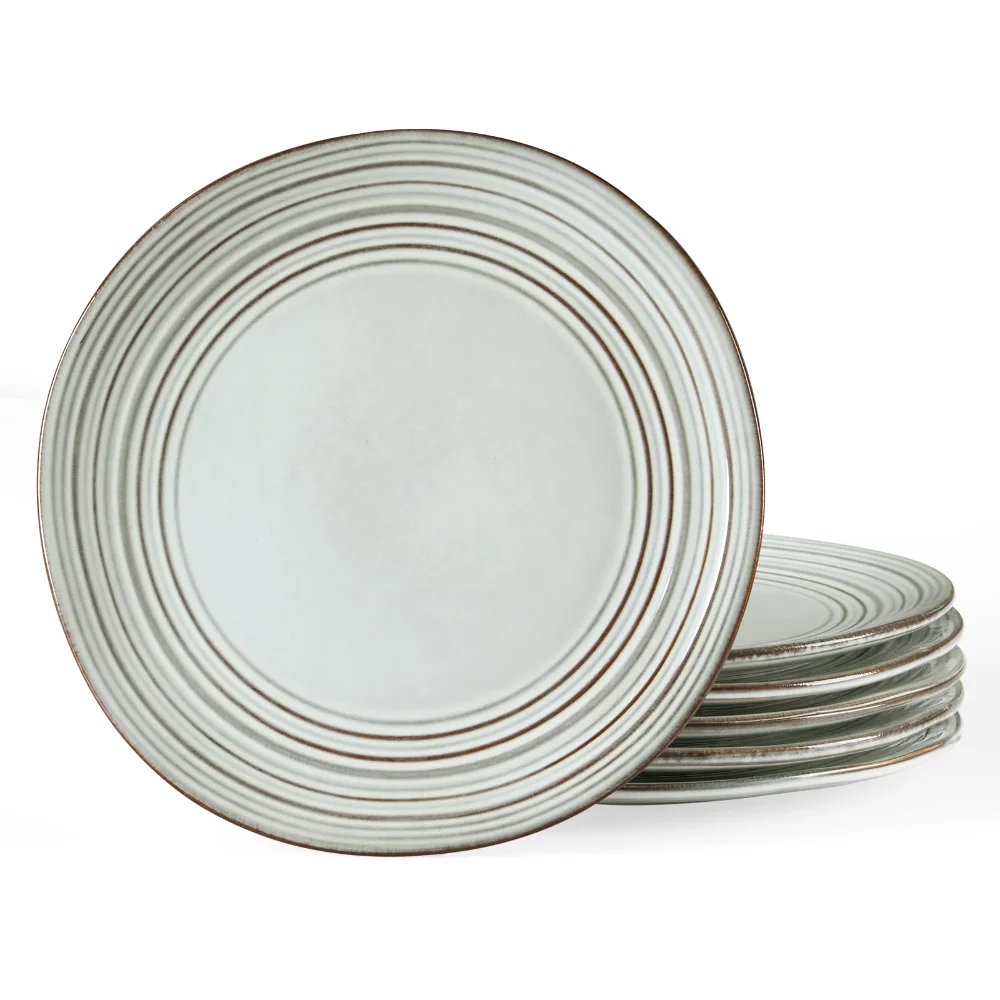
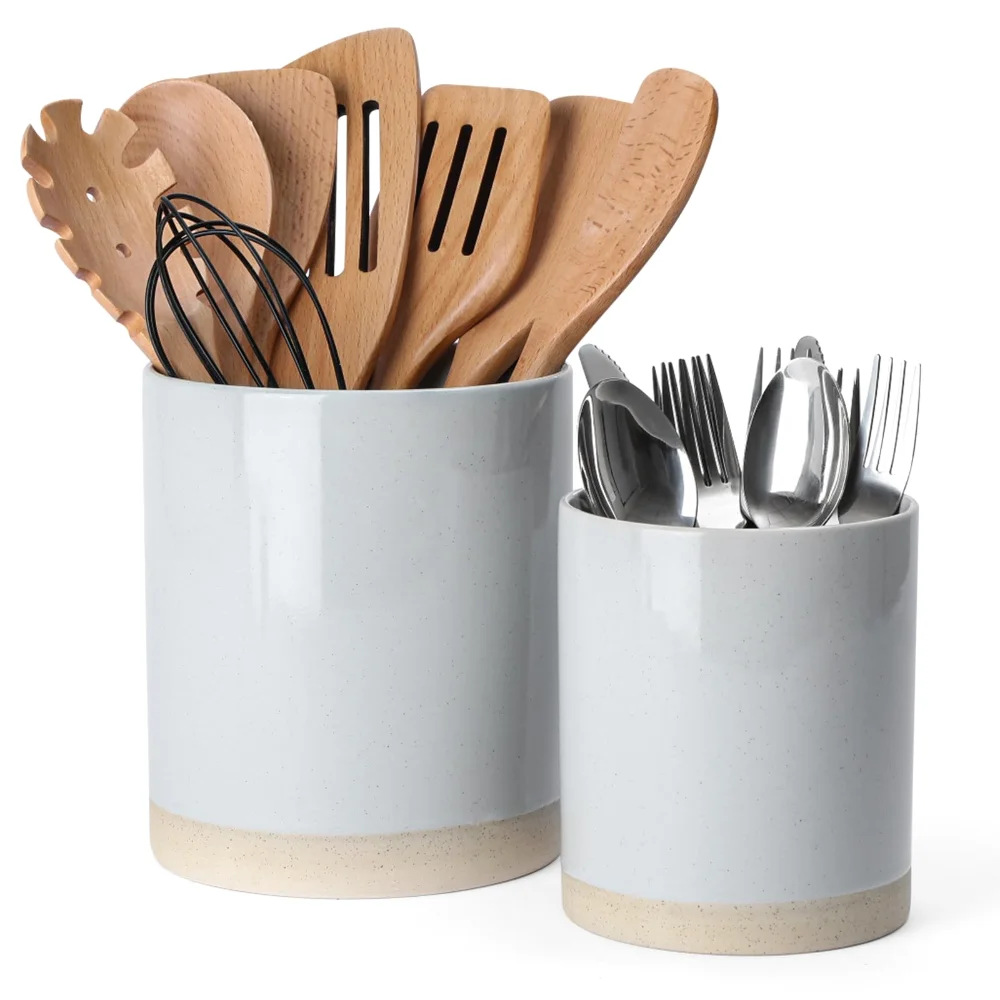
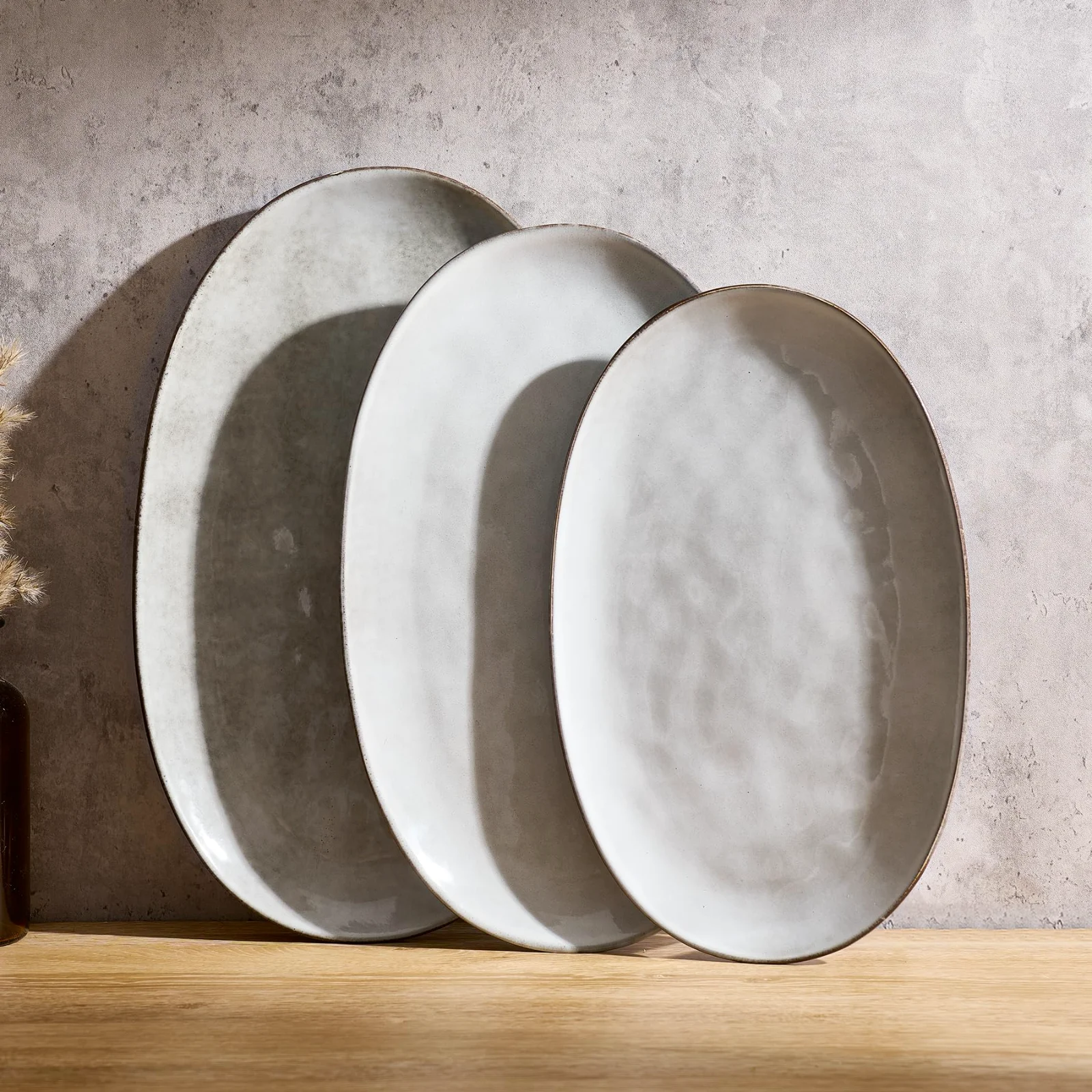
12The part that is not ours to certify
We print what is on the pack and name it as the pack. Behind it sit public standards anybody can read, and those are linked rather than paraphrased into a promise.
Fired at the right temperature for long enough, essentially all the lead in a glaze binds into the glaze itself, and any migration into food is insignificant. The ware regulators warn about is handmade and crude, antique, damaged, or bought from a street vendor.
US Food and Drug Administration, read August 31, 2026Action levels for extractable lead in ceramic tableware exist, and imports are detained against them. That check runs whether or not a maker puts a badge on the box.
US Food and Drug Administration, Compliance Policy Guide, read August 31, 2026No regulation authorises cadmium as a component of foodware or a food-contact surface. When the pack says cadmium-free it is stating that it meets the rule, and so are we.
US Food and Drug Administration, read August 31, 2026The dietary benchmarks for lead are public and set by the regulator: 2.2 micrograms a day for children, 8.8 for women of childbearing age, both describing a whole day of food rather than one dish. Read them at the source.
US Food and Drug Administration, read August 31, 2026This section is general information about ceramic tableware, not advice about a specific health question. The care claims here repeat what is printed on the pack of the line in question. If you have a particular concern about lead exposure — an old piece, a damaged glaze, a child in the house — take it to a healthcare professional or a public health authority rather than to a catalogue.
13The names on the boxes
Most Famiware collections are named after the night sky, which sounds like decoration until you try to choose between them. Every name is a glaze recipe, and the difference between two of them is a surface rather than a shape.
Start with what does not change, and what has not changed in the 9 years we have been firing this glaze. Every piece in the Famiware range is stoneware from one body, fired until it vitrifies — the pack for the Star and Milkyway sets puts that at 2340°F held for thirteen and a half hours — and finished with a double reactive glaze. That is the constant. A Nebula bowl and a Mars bowl are the same clay doing the same job, and they will sit on a table together without an argument.
What the collection name changes is the recipe on top. A reactive glaze is not a colour, it is a reaction: metal oxides suspended in the coat separate at temperature, travel, and settle thicker in the well of a piece than over its rim, where the clay shows through paler. Change the oxides and you change how far the colour travels, how much iron burns through as speckle, and whether the rim finishes as a soft fade or a hard dark line. That is the whole of what separates Milky Way from Mercury.
The shapes move too, but less than you would expect. Jupiter, Saturn and Venus carry a raised rim; the rest run coupe, with the curve going right to the edge. Ocean is the one line that comes square as well as round. Star has ribbing down the sides of its bowls and mugs. Beyond that, a dinner plate here is a dinner plate: 10 to 10.5 inches, flat-footed, and stackable two high before the unglazed foot starts marking the piece underneath.
| Collection | Models | Shelves | Glazes | Price | What the surface does |
|---|---|---|---|---|---|
| Star | 89 | 5 | 49 | $27.99 – $170.99 | Ribbed sides and a deep well; the widest palette in the range, from matte white to a near-black charcoal. |
| Ocean | 74 | 6 | 23 | $16.14 – $157.98 | The only line that comes square as well as round, and the square plates stack flat. |
| Nebula | 61 | 6 | 20 | $16.99 – $159.99 | Pale body, fine speckle, a rim that runs a shade darker. The quiet one. |
| Milkyway | 57 | 6 | 46 | $13.99 – $179.99 | A thin dark line drawn round the rim where the glaze pulls away. Two-tone boxes are common here. |
| Jupiter | 30 | 4 | 18 | $18.04 – $130.10 | A raised rim rather than a coupe edge, which keeps a sauce where it was put. |
| Venus | 22 | 2 | 14 | $21.84 – $142.99 | Rimmed like Jupiter, in softer, milkier glazes; mugs and sets only. |
Which matters when you are buying, because the collections are not equally deep. Star runs to five of the six shelves and the widest palette in the range; Ocean and Nebula cover all six. Venus covers two. If you expect to add to a table over several years — a sixth mug, two more plates, a platter that matches — that reach is worth more than the surface you liked slightly better on a screen. A collection with six shelves behind it will still have the piece you need next winter.
The other thing the table above will not tell you is that these lines are built to mix. They share a body, a foot and a plate profile, so a Milky Way bowl on an Ocean plate reads as a table somebody thought about rather than a mistake. One buyer here says she mixed two lines deliberately and preferred it to either alone, and that is the use the range rewards: pick a collection for the pieces you use every day, and let the second one be whatever you actually liked.
What none of them will do is match perfectly, and no name on that list changes it. The glaze moves in the firing on purpose, so two plates out of one box differ, and a box bought this year differs a little from the one bought last. If that is a problem rather than the point, the honest advice is to buy a single piece first and look at it in your own kitchen light before the rest of the table depends on it.
14In their words
Printed as they came, with the size each one names linked underneath. Three are long and unflattering, and those are the three worth reading.
★★★★★
Straight out of the box
I just got mine and they look beautiful. The white is a bit greyish, the bottoms are rough and scratch so I’ll need to buy something to place in-between these, and they don’t stack as neatly as I thought they would. You will obviously have to be much more careful with these unlike other dishes, due to that nature. I find these to just be natural flaws due to it being clay so I don’t count that against these. Just something to consider when buying them.
on Famiware Milkyway 12-Piece Stoneware Dinnerware Set, for 4
★★★★☆
Four pasta bowls, one cupboard
These dishes arrived early and were packed incredibly well. None of mine showed up chipped, broken, or malformed. They have a nice weight to them but don’t feel cumbersome. The sizes are exactly as described. The color is exactly what I had hoped they would be, and each piece is unique per advertising. They don’t get a five star rating because they don’t nestle together the way I had hoped, but this is to be expected with dish-ware made in the manner these are.
★★★★★
Wanted the imperfect look
They are heavy — this is a GOOD thing in my book, lightweight feels cheap — durable and just have that chic, designer look to them. Every dish I photograph on these plates looks amazing. They do not stack evenly or look like perfect cookie cutter plates, but that is what I wanted. If you want uniform perfection, look elsewhere. These have a handmade artisan quality to them.
on Famiware Star 10/8 inches Dinner Plates Set for 6, 6-piece
★★★★☆
Blue plates, and one chip
Beautiful color of blue. One thing unexpected is they are a little tricky to get out of the microwave as they have a flat bottom, so there’s no raised lip to get your fingers under. You do have to be careful as with most stoneware — one has already chipped on the edge.
on Famiware Star 10/8 inches Dinner Plates Set for 6, 6-piece
★★★★☆
Cereal, and the price of it
They’re the perfect size for cereal, your utensil won’t fall into the bowl — which is the problem I was having with the much wider bowls that came with my dinnerware set. They are of good weight and seem sturdy. Went through the dishwasher just fine. However, they are a bit overpriced at $30 for 4 bowls.
on Famiware Milkyway Cereal Bowl, Soup Bowls for 4, set of 4
★★★★★
How high they stack
Someone else was disappointed that you can only safely stack 2 high, and no, you shouldn’t stack higher than 2, but that doesn’t matter for me. The bottom is a non-glazed, rougher texture and it’s kinda fun. Perfect for soup.
on Famiware Milkyway Cereal Bowl, Soup Bowls for 6, set of 6
★★★★★
Six months in, no chipping
I have a full dining set of famiware. They’ve really held up the past 6 months, no chipping and still a conversation starter. My only wish, is that they made some 8 oz ramekins with the fluted design. I’d be on those so fast!
★★★★★
Coffee with room for cream
I like that the bottom of these is flat instead of tapered like many mugs are, which makes them less likely to tip over. I like that they’re 13 ounces instead of 12 so that you can add cream to the coffee without the mug being too full, easy to carry without spilling.
★★★★★
Buying a set without touching it first
I have been shopping for a dish set for months and was unsure about buying them online. I bought extra plates to add to the set for when we have guests since we entertain a lot. They came well packaged, no cracks on any of the plates. They’re lighter than oatmeal but not boring white, the speckles add some character.
15By the name people type
Eighteen pages, each one a single line of the catalogue laid out by size, glaze and price. If you already know which collection you want, start here rather than at a shelf.
Ocean is the one line here that comes square as well as round, and the square plates are the reason people find it. A square plate holds a plated dish where a coupe plate lets it slide, and it stacks flat in a cupboard that will not take another round tower.
All 38, by size and glaze →Star is the oldest and widest line in the range, and the one most of these reviews are about. It runs from a set of four up to a twenty-six piece service, in more glazes than any other collection, so it is the line to start in if you expect to add to the table later.
All 32, by size and glaze →Nebula is the quiet one: speckle through a pale body, a rim that runs a shade darker, and almost no colour shouting. It suits a table that already has something loud on it — a wooden board, a bright cloth — and it is the line people pick when they want the food to be the colour.
All 29, by size and glaze →The Star pasta bowls come in three widths, 7.5, 8.1 and 8.25 inches, which sounds like splitting hairs until you try to nest them. The small one drops inside the large one; the two large ones do not. Buy one width in quantity, or buy the widest and stop.
All 24, by size and glaze →16Before you click
Six measurements settle almost every return. Take them once and the Famiware range becomes a filter rather than a gamble.
Not the people who live there. A service for four is exactly four of each piece, so a fifth chair on a Sunday wants the set for six.
Height first. A stack of six stands taller than it looks: the unglazed foot holds each plate off the one below.
A 10.5-inch plate does not always drop into a slot cut for a 10-inch one. One buyer likes everything about her set except that.
Around 5.5 inches and 23 oz, or 7.5 to 8.75 inches and 33 oz spread flat. Most sets ship only one of the two.
Mugs here run 11 to 14 oz. If you take coffee with cream, 13 gives you the room that 12 does not.
Colour moves between pieces on purpose. If an exact match matters, order one piece first and look at it in your own light.
17Before you order
Washing, stacking, sizing a set to a table, and what a reactive glaze will and will not do.
Every card here carries a button, and every page keeps one in the header. The button on a card opens that exact piece at its current price with our retail partner, in a new tab. The one in the header opens the range instead. Either way the checkout is theirs, and so are payment, delivery and returns.
If you already know the shape you need, the shelf links in the header are the shortest way in. If you know the glaze but not the piece, the collection pages sort the same catalogue the other way round.
Because the glaze is mixed to move. In the kiln the metal oxides in it separate and travel, pooling thicker in the well of a plate and thinning over the rim, where the clay shows through paler, and iron in the body burns through as speckle. So the set will not match the way pressed porcelain matches, and it will not match its own photograph either. If an exact match matters — replacing one bowl out of six — order the single piece first and look at it in your own light.
Count the people who actually sit down, not the people who live there: a service for four is exactly four of each piece, so a fifth chair on a Sunday means the set for six. Then measure the cupboard before the table. Dinner plates here run 10 to 10.5 inches, and a stack of six stands taller than you expect, because each plate rests on an unglazed foot rather than sitting flush on the one below.
Two, if you want the bottom one to stay unmarked. The foot ring is left bare so the piece releases from the kiln shelf, and bare clay against glaze works like a fine abrasive against glass: it leaves a grey ring that washes off at first and eventually does not. A felt round between them solves it for a few pence. One buyer here reached the same conclusion on the day the box arrived.
The packs state lead-free and cadmium-free, and that is compliance rather than a feature: cadmium was never permitted on a food surface, and extractable lead in ceramic tableware is held to action levels that imports are checked against. Fired hot enough for long enough, almost all the lead in a glaze binds into the glaze itself; what regulators warn about is craft and antique ware, not commercially fired factory tableware. Every source is named on our updates page.
Width and depth, and they are not substitutes. A cereal or soup bowl is around 5.5 inches across and holds 23 to 25 oz, with sides steep enough that a spoon stays put. A pasta bowl is 7.5 to 8.75 inches, low and wide, and spreads 30 to 33 oz flat. Most dinner sets ship one or the other, so check which one is in the box before you add a second.
18Longer reads
Sizing a set to the people who sit down, what a reactive glaze does in a kiln, and how stoneware chips and what to do about it.
A service for four is exactly four of each piece. What that means on a Sunday, in a dishwasher rack, and on a cupboard shelf that was measured for the last set.
Read it →Colour that pools at a rim, speckle that comes up through the body, and a foot ring left bare on purpose. The mechanism behind the surface, and what it costs you.
Read it →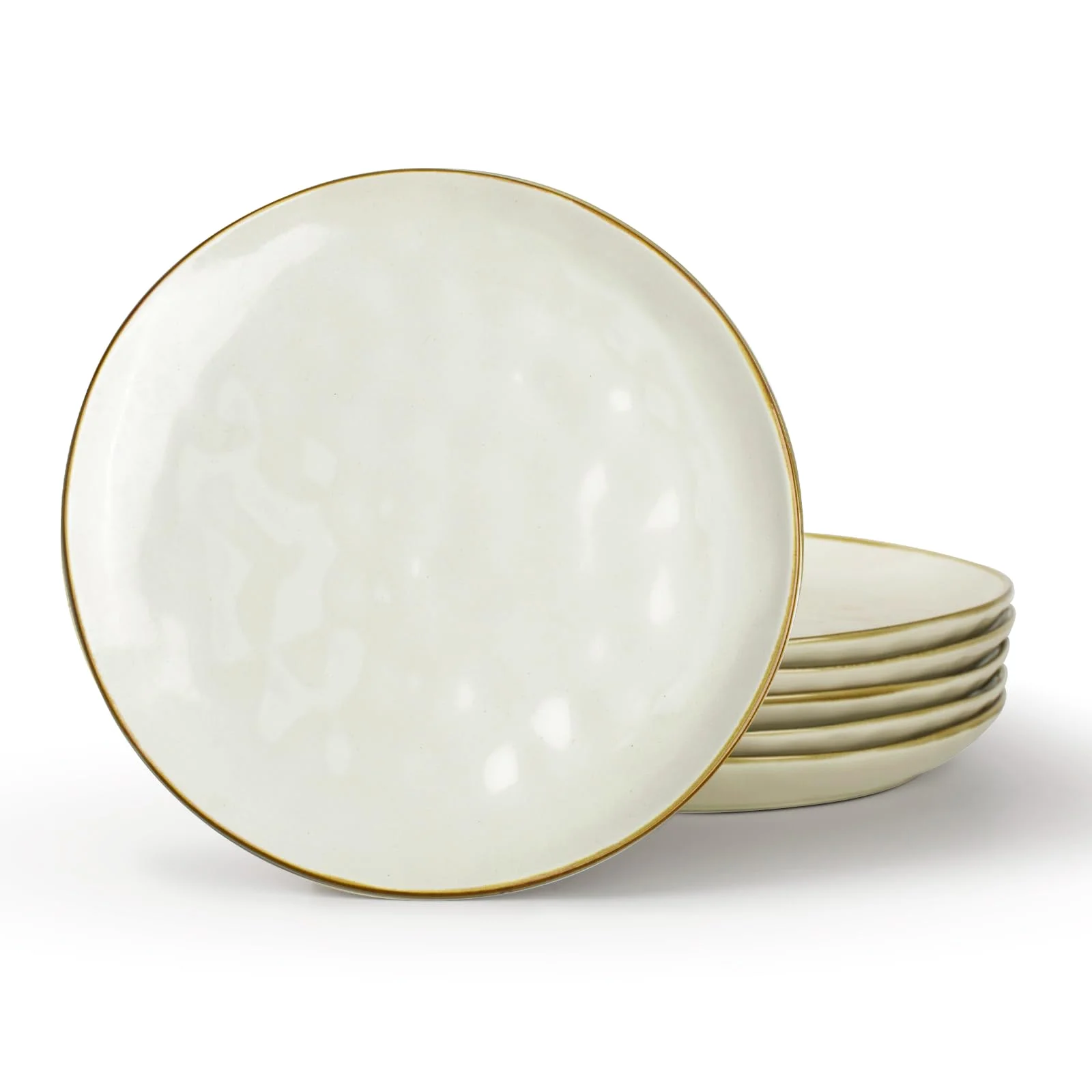
The rim goes first, and the chip shows pale clay. Where the damage starts, which habits cause it, and the line between a piece you keep using and one you stop eating off.
Read it →Every Famiware size, every glaze
Every diameter, capacity and glaze in the Famiware lineup sits behind this button, with the price we last read against each one.